For many NDIS participants, choosing where to live is closely connected to the support they need each day. The right home can make it easier to move around safely, use assistive equipment, receive support and maintain as much independence as possible.
Specialist Disability Accommodation (SDA) plays a significant role in the lives of people who have disability-related needs. However, SDA funding is not included in every NDIS plan. Understanding its eligibility and the required evidence is essential.
In this guide, we will discuss SDA eligibility in Australia, the evidence that may be required and what happens after SDA funding is approved.

What Is SDA?
Specialist Disability Accommodation is specialised housing designed for NDIS participants who have significant disability-related housing needs.
SDA properties can include features such as accessible bathrooms, wider doorways, specialised kitchens, ceiling hoist provisions and other design features that support different levels of accessibility.
SDA is different from ordinary disability housing or an accessible rental property. It is specifically designed for eligible NDIS participants and is intended to make it easier for them to live independently and for other supports to be delivered safely and effectively.
Who Is Eligible for SDA?
The NDIS identifies two main circumstances relevant to NDIS SDA eligibility: extreme functional impairment and very high support needs.
Extreme Functional Impairment
Extreme functional impairment means a person has significant limitations in their ability to perform everyday activities because of their disability.
The assessment is not simply based on a diagnosis. Instead, the focus is on how the person’s impairment affects their functional capacity and housing needs.
For example, someone may require a highly accessible environment because their disability significantly affects their mobility or ability to carry out everyday activities.
Very High Support Needs
Some participants have very high support needs that make ordinary housing unsuitable or make it difficult to provide the supports they require safely and effectively.
The level and complexity of support a person requires can therefore be relevant when considering SDA.
However, having very high support needs does not automatically result in SDA approval. The NDIS considers the participant’s overall circumstances and whether the relevant SDA requirements are met.
Meeting One Criterion Is Not Enough
Extreme functional impairment or very high support needs are only part of the assessment.
The NDIS also considers whether the participant meets the SDA needs requirement and the relevant funding criteria. This means SDA should not be viewed as an automatic entitlement based on a diagnosis or level of disability.
SDA Eligibility in Australia: The Numbers
SDA supports a specific group of NDIS participants with significant housing and support needs.
The NDIS publishes data on participants who have SDA funding in use and those who are SDA-eligible but not yet using SDA. Its participant datasets are updated regularly.
As per NDIS SDA data, as at 31 December 2024, 14,688 participants were using SDA, while another 9,834 participants were SDA-eligible but not yet using it. This means more than 24,000 participants were represented across these two groups at that time.
These figures also highlight an important distinction: being SDA-eligible does not necessarily mean a participant is already living in an SDA property.
What Does the NDIS Consider When Assessing SDA Eligibility?
When assessing SDA eligibility, the NDIS considers the participant’s individual circumstances and housing needs.
Relevant information may include:
Age and Residency
To access the NDIS, you generally need to be under 65 when you apply and live in Australia as an Australian citizen, permanent resident or Protected Special Category Visa holder. Different rules may apply depending on your circumstances.
Functional Capacity
Information about how the person’s disability affects everyday activities, mobility and their ability to use their current home.
Support Requirements
The type, level and complexity of support a person needs may help demonstrate why ordinary housing may not be suitable.
Current Housing
The participant’s existing living arrangement can provide important context. Accessibility barriers, safety concerns or limitations in the property may be relevant.
The key question is not simply whether a person wants specialised accommodation. It is a question of whether SDA is an appropriate and necessary option based on their disability-related needs.
Evidence Needed for SDA Eligibility
The NDIS considers evidence that shows how a person’s disability affects their daily functioning, support needs and housing requirements. Depending on the person’s circumstances, this may include:
- Occupational Therapy Functional Capacity Assessment (FCA) to document functional limitations and support needs.
- WHODAS 2.0 to assess how a person’s health condition or disability affects everyday functioning.
- Care and Needs Scale (CANS), particularly for people with acquired brain injury.
- Functional Independence Measure (FIM) where clinically relevant.
- Support records or diaries showing the level and frequency of assistance required.
- Medical and specialist reports explaining the person’s disability, functional limitations and housing needs.
The evidence should be specific to the individual and explain why their disability-related needs require specialised housing. No single assessment automatically establishes SDA eligibility; the NDIS considers the person’s overall circumstances and available evidence.
SDA Eligibility vs SDA Funding
SDA eligibility and SDA funding are closely connected but are not exactly the same.
SDA eligibility refers to meeting the requirements for Specialist Disability Accommodation. If SDA is approved as part of an NDIS plan, the funding is intended to contribute towards the cost of the specialised housing.
SDA funding does not cover every cost associated with living in the property. Participants generally still contribute towards rent and everyday living expenses.
SDA also does not automatically pay for the personal or daily living supports a participant may receive in their home. These supports are separate from the physical accommodation.
SDA vs SIL and Other NDIS Housing Options
SDA is sometimes confused with other NDIS accommodation and home-and-living supports.
Option | Main purpose |
SDA | Specialised housing for eligible participants with significant disability-related housing needs |
SIL | Support with daily living and developing independence |
MTA | Temporary accommodation in specific circumstances |
Home modifications | Changes to an existing home to improve accessibility |
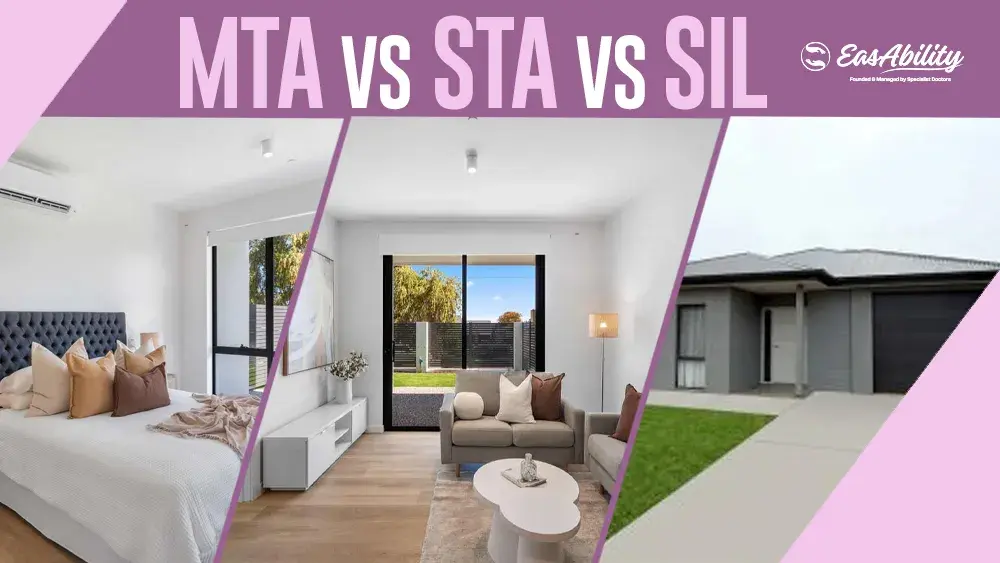
For example, SDA relates to the physical dwelling, while Supported Independent Living (SIL) relates to the support a person receives with daily activities.
A participant may have SDA, SIL or another combination of supports depending on their individual circumstances.
Common SDA Eligibility Myths
Myth 1: Everyone on the NDIS qualifies for SDA
Fact: SDA is available to participants who meet specific eligibility and funding requirements.
Myth 2: Your diagnosis automatically qualifies you
Fact: The NDIS considers functional impairment, support needs and housing requirements rather than diagnosis alone.
Myth 3: SDA and SIL are the same
Fact: SDA relates to the specialised home, while SIL provides support with daily living.
Myth 4: SDA covers all living expenses
Fact: Participants may still need to contribute towards rent and ordinary household costs.
Myth 5: An SDA provider decides whether you are eligible
Fact: SDA eligibility and funding decisions are made through the NDIS process. Providers offer suitable properties to participants with relevant funding.
What Happens After SDA Is Approved?
If SDA is included in your NDIS plan, the next step is to find a property that meets your approved requirements.
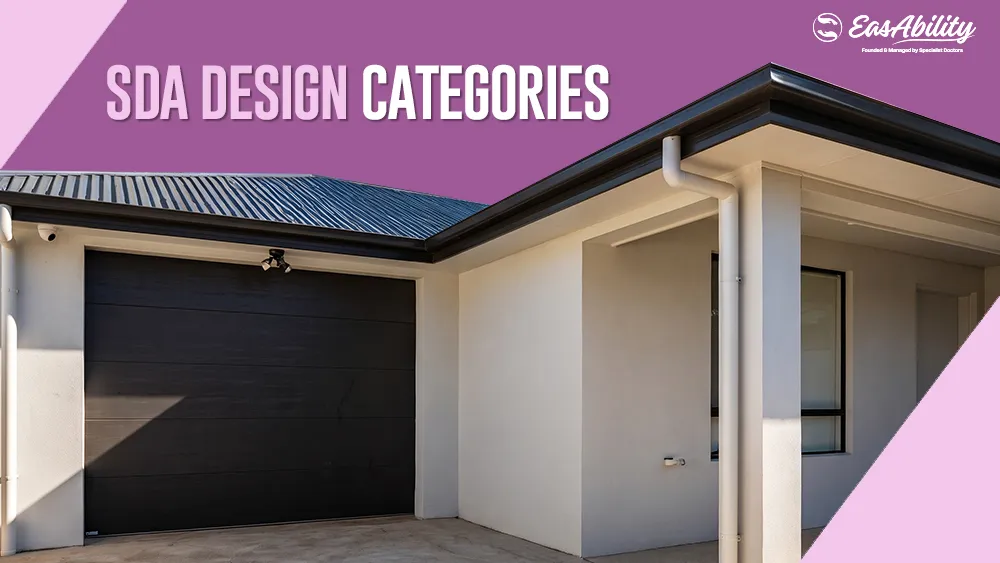
SDA properties are available across different design categories, including:
- Improved Liveability
- Fully Accessible
- High Physical Support
- Robust
Each category is designed around different accessibility and support requirements.
When comparing SDA accommodation, consider:
- Accessibility features
- Design category
- Location
- Space for mobility equipment
- Bedroom and bathroom arrangements
- Transport and nearby services
- Proximity to family or community
- How the property fits with your support arrangements
The NDIS also provides an SDA Finder to help participants search for suitable properties and vacancies.
SDA Housing in Adelaide
If you have SDA funding and are looking for SDA housing in Adelaide, the property should be assessed against your individual requirements rather than chosen simply because it is available.
EasAbility provides Specialist Disability Accommodation in Adelaide across different design categories, including High Physical Support, Fully Accessible, Improved Liveability and Robust options.
Available properties and vacancies can change, so participants should check current options and consider whether a property meets their accessibility, location and support requirements.
You can explore EasAbility’s SDA accommodation in Adelaide to learn more about available housing options.
How EasAbility Can Help
Finding suitable SDA housing is about more than locating an accessible property. The home should fit your needs, preferences and broader support arrangements.
EasAbility provides SDA options in Adelaide designed around different accessibility and support requirements. Its accommodation options may suit participants seeking specialised housing in Adelaide and surrounding areas, subject to availability.
If you already have SDA funding, EasAbility can help you explore available properties and understand the features of different homes.
If you are still unsure whether you qualify for SDA, it is best to discuss your circumstances with the NDIS, your planner, Local Area Coordinator or an appropriately qualified professional.
Frequently Asked Questions About SDA Eligibility
1. Who is eligible for SDA in Australia?
SDA is generally intended for NDIS participants with extreme functional impairment or very high support needs who meet the relevant SDA needs and funding requirements.
2. What evidence is needed for SDA eligibility?
Evidence may include functional assessments, information about support needs, current housing limitations and relevant professional reports.
3. Can I get SDA if my current home is accessible?
It depends on your circumstances. The NDIS considers whether your current housing and other available options adequately meet your disability-related needs.
4. Is SDA the same as SIL?
No. SDA relates to the specialised physical home, while SIL provides support with daily living and the development of independence.
5. Can I choose my SDA provider?
If you have SDA funding, you can explore suitable properties and providers based on your housing requirements and preferences.
6. Does SDA cover rent?
SDA funding covers the specialist housing component. Participants generally still contribute towards rent and everyday living expenses.
7. Can I find SDA housing in Adelaide?
Yes. SDA properties are available in Adelaide, although locations and vacancies vary. Participants can search for suitable properties through the NDIS SDA Finder and local SDA providers.
Final Thoughts
SDA eligibility in Australia depends on your individual functional impairment, support needs and housing requirements. Having an NDIS plan or needing accessible housing does not automatically mean you qualify.
If you think SDA may be suitable, discuss your housing needs with the NDIS and gather relevant supporting information. If SDA funding is approved, you can then compare properties based on accessibility, location and your personal preferences.
For participants seeking SDA housing in Adelaide, EasAbility offers specialised accommodation across various SDA design categories, subject to availability.
EasAbility Care – General Information Disclaimer
The information provided on this page is for general informational purposes only and does not constitute professional, legal, medical, or NDIS advice. While reasonable efforts are made to ensure the accuracy of the content, EasAbility Care makes no representations or warranties regarding the completeness, reliability, or suitability of the information provided.
Please note:
- EasAbility Care provides a range of disability support services designed to assist NDIS participants in achieving their goals, increasing independence, well-being, and community participation.
- EasAbility Care offers various NDIS-related supports, and the availability of specific services may vary depending on individual circumstances, funding, and location.
- Eligibility for NDIS funding and related support is determined solely by the National Disability Insurance Agency (NDIA) based on a participant’s individual needs, goals, and assessments.
- Access to services, funding approvals, and support arrangements may vary depending on a participant’s NDIS plan and personal circumstances.
- Users should seek independent advice from the NDIA, Support Coordinators, Support Workers, Psychiatrists, Psychologists, General Practitioners, or other qualified professionals before making decisions based on the information available on this website.
To the maximum extent permitted by law, EasAbility Care accepts no liability for any loss or damage arising from reliance on the information contained on this website. This disclaimer may be updated at any time without notice.