
Getting SIL approved in your NDIS plan feels like a win. Then the invoices start arriving, and a new question shows up: what is this money actually meant to pay for?
It’s one of the most common points of confusion for NDIS participants and families. Supported Independent Living (SIL) funding should cover everything needed for independent living, including a roof over your head. It doesn’t.
SIL funding for NDIS support is generous, but it’s also specific, and knowing exactly where the line is drawn can save you from awkward conversations, unexpected bills, and funding that runs out faster than it should.

In this guide, we will break down NDIS SIL funding in plain English: what it pays for, what it doesn’t, and how SIL support arrangements work.
What SIL Funding Is Designed To Cover
SIL funding is for support workers who help or supervise participants with daily activities at home. The NDIS describes SIL as support provided 24 hours a day, 7 days a week, with the type and amount of assistance based on a participant’s disability support needs.
Support may be shared with other people living in the home or provided individually.
The key distinction is simple: SIL funding covers disability-related support, not the cost of running your household.
Personal Care And Daily Tasks
SIL may include support with everyday activities that a participant has difficulty completing independently.
This can include:
- Personal care, such as showering and getting dressed
- Eating and preparing meals
- Cleaning and household tasks
- Developing daily routines
- Developing social skills
- Supervision and personal safety
The purpose is not simply to have someone complete tasks for you. SIL can also help you develop skills and become more independent in your daily life.
The support you receive depends on your individual disability-related needs.
Medication Support And Medical Appointments
SIL may include medication management and support with medical appointments.
This does not mean SIL replaces medical or nursing services. The NDIS distinguishes disability-related supports from services that are the responsibility of the health system or another service system.
For example, a support worker may assist you with medication management or support you in attending an appointment, while clinical healthcare remains the responsibility of the appropriate health professional or service.
Skill Development And Behaviour Plans
Building independence is an important part of supported independent living.
SIL may support participants to develop skills such as:
- Cooking and meal preparation
- Cleaning
- Establishing daily routines
- Developing social skills
- Managing everyday personal tasks
SIL may also include support to implement an existing behaviour support plan.
However, implementing a behaviour support plan is different from developing it. The NDIS treats these as separate supports.
Community Access
Although SIL focuses on support at home, the NDIS also identifies some community access as part of SIL.
This can include community access that is not routine or regular, as well as getting to and from certain community access activities. Examples given by the NDIS include attending therapy sessions or visiting family and friends.
This does not mean every community activity is automatically paid for through SIL. Other regular community participation supports may be funded separately under the appropriate NDIS arrangements.
What SIL Funding Does Not Cover
SIL funding is not intended to pay for ordinary living costs.
The NDIS identifies expenses such as rent, groceries, utilities, telephone and internet costs, vehicle costs, and holiday or travel expenses as being outside SIL.
SIL Funding May Cover | SIL Funding Does Not Cover |
Personal care support | Rent, board or lodging |
Cooking and meal preparation support | Groceries |
Cleaning and household task support | Gas, electricity and water |
Skill development | Telephone and internet bills |
Supervision and personal safety | Vehicle costs |
Medication management | Holiday and travel expenses |
Certain community access support | Other ordinary living costs |
The distinction is important: SIL can fund the support you need because of your disability, but ordinary costs associated with living in a home remain your responsibility.
SIL Does Not Pay For The Home Itself
SIL funding does not cover rent, board or lodging. It is also different from Specialist Disability Accommodation (SDA). SIL funds the support provided by support workers, while SDA relates to the specialised housing itself.
Some participants may have both SIL and SDA, but having one does not automatically mean they receive the other.
Home modifications and other housing-related supports can also be considered separately under the NDIS where the relevant requirements are met. They should not be treated as part of SIL funding simply because the modification is in a SIL home.
Not Every Support In A SIL Home Is Automatically SIL
Living in a home where SIL is provided does not mean every support received there is automatically claimed as SIL.
The NDIS states that only one support can be claimed per period. For example, when a participant is out in the community, that support may be claimed under community supports rather than SIL.
This is why the location of a support is not the only consideration. The type of support, when it is provided and what it is intended to achieve also matters. SIL can sit alongside other NDIS supports where those supports are appropriate and meet the relevant requirements.
SIL vs SDA vs Other NDIS Supports
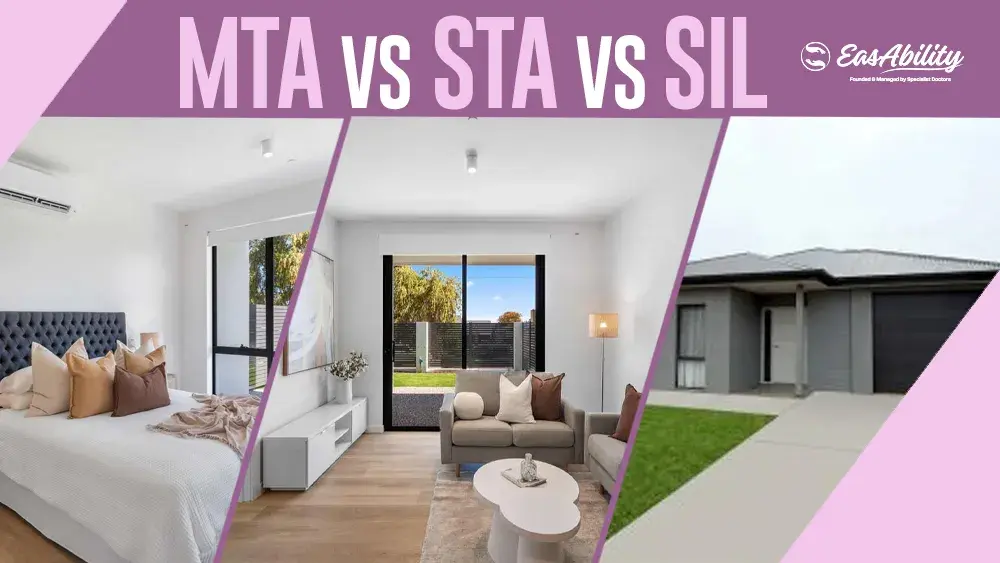
SIL, Specialist Disability Accommodation (SDA) and other NDIS supports can all play a role in helping someone live more independently, but they fund different things.
- SIL funding pays for support workers who help or supervise a participant with daily activities, personal care, household tasks, skill development and other supports included in their SIL arrangement.
- SDA relates to the physical home. It is for eligible NDIS participants who require specialised housing due to their disability-related needs. SDA can include purpose-built homes with features designed to support people with very high physical support needs or extreme functional impairment.
- Other NDIS supports may fund different types of assistance depending on the participant’s individual needs and plan.
The simplest way to remember the difference is: SIL is about the support you receive; SDA is about the specialised housing.
How SIL Funding And Support Arrangements Work
SIL funding is based on a participant’s disability support needs. Support may be regular or irregular, depending on what the participant requires.
The NDIS has standard and high-intensity pricing arrangements for SIL. High-intensity supports are provided where workers need additional skills, experience, or qualifications to provide the required support.
A Roster of Care can help participants and providers understand how support is arranged across a typical week. However, it is not mandatory and does not need to be submitted to the NDIS.
The NDIS may consider a roster alongside other information when determining the level of support required. A service agreement can also set out the services a provider will deliver and how those services will be provided.
If you’re unsure whether SIL is suitable for your circumstances, read our guide to SIL eligibility to understand who may be eligible and what the NDIS considers.
What To Check With Your SIL Provider
If you are unsure whether a particular expense or service can be paid for through SIL, check what is included in your support arrangement.
It can be useful to understand:
- What SIL supports your provider will deliver
- Which supports are shared, and which are individual
- How regular and irregular support is handled
- Which everyday costs remain your responsibility
- Whether another NDIS support may apply instead
Your service agreement should explain the services you and your provider have agreed to.
If something is still unclear, speak with your support coordinator, provider or NDIS contact before assuming that the expense can be claimed from your SIL funding.
Supported Independent Living In Adelaide
If you are looking for Supported Independent Living in Adelaide, understanding the difference between support costs and everyday living expenses is an important part of choosing a service.
EasAbility provides Supported Independent Living services for NDIS participants in Adelaide. Our team can discuss your support needs and explain the SIL options available based on your circumstances.
Frequently Asked Questions About SIL Funding
Does SIL Funding Cover Rent?
No. SIL funding does not cover rent, board or lodging. These are generally the participants’ responsibility.
Does SIL Funding Cover Groceries?
No. Groceries are an ordinary living expense and are not covered by SIL funding.
Can SIL Funding Pay For Utilities?
No. Electricity, gas, water, telephone and internet costs are not included in SIL funding.
Does SIL Cover Personal Care?
Yes. SIL may include support with personal care, such as showering and getting dressed, depending on your disability-related support needs.
Can SIL Funding Cover Community Access?
SIL can include some community access support, particularly community access that is not routine or regular. Other community participation supports may be funded separately.
Does SIL Funding Pay For SDA?
No. SIL and SDA are different supports. SIL funds support workers, while SDA relates to the specialised housing itself.
Is A Roster Of Care Required For SIL?
No. The NDIS states that a Roster of Care is not mandatory and does not need to be submitted to the NDIS. It can be used by participants and providers to understand and pla
Conclusion
SIL funding is intended to cover disability-related support that helps participants manage daily life and build greater independence. It does not cover ordinary living costs such as rent, groceries, utilities, vehicle costs or travel expenses.
If you are unsure whether a particular support or expense falls under SIL, check your service agreement and speak with your SIL provider, support coordinator or NDIS contact. Understanding that boundary can help you use your NDIS SIL funding appropriately and know what costs you need to plan for separately.
EasAbility Care – General Information Disclaimer
The information provided on this page is for general informational purposes only and does not constitute professional, legal, medical, or NDIS advice. While reasonable efforts are made to ensure the accuracy of the content, EasAbility Care makes no representations or warranties regarding the completeness, reliability, or suitability of the information provided.
Please note:
- EasAbility Care provides a range of disability support services designed to assist NDIS participants in achieving their goals, increasing independence, well-being, and community participation.
- EasAbility Care offers various NDIS-related supports, and the availability of specific services may vary depending on individual circumstances, funding, and location.
- Eligibility for NDIS funding and related support is determined solely by the National Disability Insurance Agency (NDIA) based on a participant’s individual needs, goals, and assessments.
- Access to services, funding approvals, and support arrangements may vary depending on a participant’s NDIS plan and personal circumstances.
- Users should seek independent advice from the NDIA, Support Coordinators, Support Workers, Psychiatrists, Psychologists, General Practitioners, or other qualified professionals before making decisions based on the information available on this website.
To the maximum extent permitted by law, EasAbility Care accepts no liability for any loss or damage arising from reliance on the information contained on this website. This disclaimer may be updated at any time without notice.