Selecting the ideal living solution for individuals with a disability might be challenging, mainly because it requires a delicate balance between independence and sufficient support. One of the best solutions that offers the right combination is Supported Independent Living (SIL), which has quickly gained popularity among NDIS participants in Australia.
However, phrases such as SIL funding, SIL housing, and SDA versus SIL can make things complicated for many families and participants. This guide simplifies things by offering easy-to-understand details on everything you need to know about SIL.
If you wonder about the meaning of SIL accommodation, SIL housing vacancies, and how SIL providers function in Adelaide, then continue reading to gain insight. The guide covers all these and many other topics related to the topic. You will learn what SIL is, how it works, and much more information about this option.

What is SIL?
Supported Independent Living (SIL) is one type of support under the NDIS. This support helps individuals with disabilities live as independently as possible by assisting with daily tasks and helping them become more independent.
Now, what does SIL actually stand for? SIL isn’t only about accommodation for disabled people. It means creating a way of life in which the participant has access to the necessary supports at the right time, while remaining empowered to live independently.
When people ask, “What is a SIL under NDIS?”, the answer lies in its purpose. SIL aims to support people who require continuous or 24/7 care. Unlike relying solely on family and institutionalisation, people can opt for a support service while residing comfortably in a home setting.
According to the NDIS, the SIL program involves individualised plans tailored to a person’s needs. This includes his/her goals and lifestyle choices. It is important to remember that not all individuals require the same degree of help.
What sets SIL apart from other services is its emphasis on freedom and independence. Participants have the freedom to decide where, with whom, and under what provider they want to reside.
What is an SIL House?
The next question many people ask is “What is an SIL house?” In simple terms, an SIL house is a household where people with disabilities live (alone or with others) and receive support services funded under the NDIS.
An SIL house is designed to make participants feel at home, not like a specialised institution for people with disabilities. An SIL house can either be a group home with several people or an independent place, depending on the type of assistance one may need.
Most of the time, an SIL house hosts 1 to 4 participants, each with their own bedroom but using the common facilities such as the kitchen, dining, and living rooms.
Some characteristics of SIL accommodation include:
- Personal support for tasks such as washing, preparing food, housekeeping, and other daily activities
- Fostering independence for daily living activities
- Creating chances for making friends and engaging socially
- Helping attend special occasions, appointments, and other activities
- Specialised assistance for people with complex requirements
In addition, you will encounter such phrases as “SIL housing” and “SIL accommodation.” All these refer to the same form of living arrangements made possible through NDIS.
The most important thing to note here is that SIL accommodation refers primarily to disability support rather than the actual property itself. This is the reason why SIL vs SDA is relevant and important.
Advantages of Supported Independent Living
The advantages of Supported Independent Living (SIL) extend beyond providing housing for participants. It offers real chances for development, gaining confidence, and becoming more independent.
Independence
With the help of SIL programs, participants gain the ability to organise their schedule and perform everyday actions. In other words, SIL teaches them to be responsible and makes them gain confidence.
Developing Skills
Participants will acquire the necessary skills required to be self-reliant. Participants will gain knowledge about cooking, cleaning, and budgeting. Furthermore, participants will learn how to travel using various methods of transportation.
Social Interaction
Since participants will be sharing the same household, there is an opportunity to socialise, meet new people, and even form friendships.
Mental and Emotional Health
Living in a respectful atmosphere is very important. This is especially relevant in cases when participants struggle with mental disorders. This kind of environment helps improve their psychological well-being.
Enhancement of Psychological and Emotional Stability
A caring and appreciative environment plays an important role in enhancing one’s mental well-being. Individuals are assured and feel valued in such an environment.
Safety and Support
With trained staff available, participants always have help when they need it. This ensures safety while still encouraging independence. Families also feel reassured knowing their loved ones are well supported.
How to Get SIL? Step-By-Step Process
Step 1: Revise Your NDIS Plan
To access funding through the SIL program, start by revising your NDIS plan. In other words, you must make it clear that your aim is greater independence in your life.
Having housing goals in the plan is a good way to lay a solid foundation for the further steps needed to access the necessary services.
Step 2: Collect Evidence
The second step is to collect evidence to support your application for SIL services. It is advisable to use assessments, particularly those conducted by an Occupational Therapist (OT). The OT assesses your functional capacity and explains why you need SIL funding.
Moreover, there may be other relevant reports prepared by specialists, such as psychologists. In other words, having sufficient evidence plays an important role when deciding whether your application meets the criteria.
Step 3: Apply for Change of Circumstances
Once all necessary reports have been collated, your support coordinator will forward them to the NDIS in conjunction with an application for a change of circumstances.
In this phase, the NDIS Home and Living team will conduct an extensive assessment to determine whether Supported Independent Living is the right choice for you.
Step 4: Look for Suitable SIL Providers
After you have been accepted, you may begin searching for vacant SIL homes and meeting with appropriate providers. This means choosing a provider who suits your individual needs and requirements.
Here, the provider prepares a Roster of Care (RoC) that describes the support you need. Then the RoC is sent to NDIS, which approves your funding.
Spending enough time on this stage is essential, as choosing the right provider greatly influences your future.
Step 5: Move into Your New Home
Because moving into a new home can be challenging, a transition period is in place when you move into your SIL’s accommodation. You start by visiting the new place, spending some nights there, and finally moving in. In this way, you will get used to your home, roommates, and support workers.
Thus, this stage helps make your future experience at your SIL’s place comfortable and productive.
Choosing the Right SIL Provider
Selecting the appropriate SIL provider may be one of the best choices you can make in the coming days. Given that the selected provider will become an integral part of your routine life, it is only natural to choose the most appropriate provider.
The best providers, like Easability, always focus on person-centred care first. That is, their primary goal is to understand your needs, wants, and desires before taking any steps to help you.
When choosing a SIL provider in Adelaide or elsewhere, consider their experience, staffing, and approach to caregiving services. You can always try contacting the provider and visiting the site where the provider’s caregivers work.
The following aspects are the most important while making the choice:
- Skilled and experienced caregivers
- Communication and transparency
- Adaptability
- Client testimonials
- Highly prioritising independence and social integration
Am I Eligible for SIL House?
Not everyone can get SIL funding because the NDIS carefully checks who truly needs this level of support. It is usually approved for people who need help with daily tasks for most of the day, sometimes all day and night.
SIL support is important for safety, not just comfort. If living alone could put you at risk or make daily life very difficult, SIL may be the right option. Your family situation also matters when applying for SIL. If your family is unable to give the care that you require, it adds weight to your argument.
You must also have professional documentation from a therapist, psychologist, or other relevant professional. This documentation explains your daily struggles and demonstrates why accommodation through SIL is required.
Key Eligibility Criteria for SIL
- Need support most of the day, often 24/7
- Cannot live safely without help
- The family cannot provide enough care
- Usually 18+ years old
- OT report showing daily support needs
- Psychologist report if required
- Other behaviour or incident reports
Good evidence helps the NDIS understand your needs and improves your chances of getting approved for SIL accommodation.
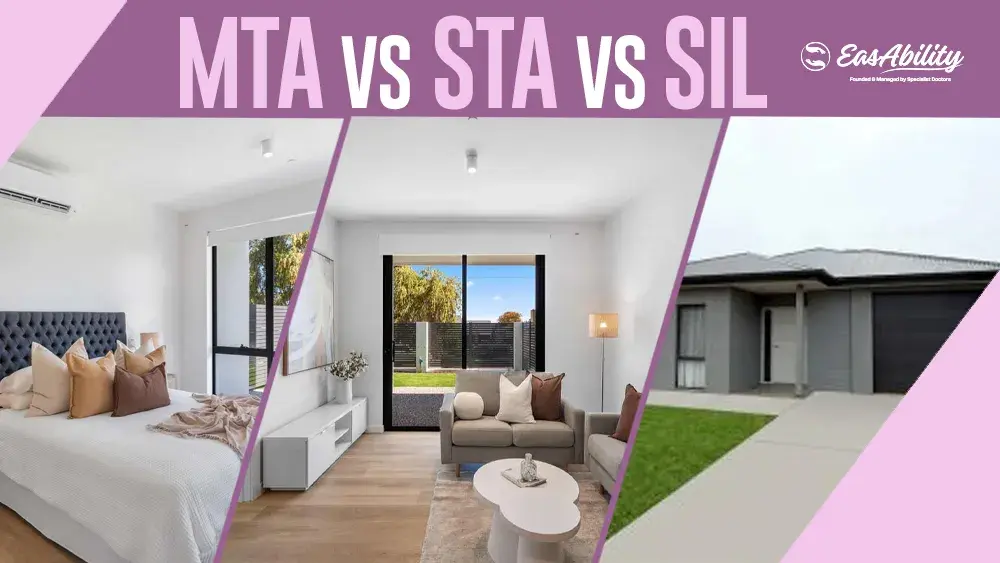
SIL vs. SDA vs. ILO: What’s the Difference?
NDIS terms like SIL, SDA, and ILO can feel confusing, especially when you’re trying to choose the right living option. Each one supports a different part of your life, such as support, housing, or flexibility. Here’s a clearer, simplified comparison:
| Feature | SIL (Supported Independent Living) | SDA (Specialist Disability Accommodation) | ILO (Individualised Living Options) |
|---|---|---|---|
| Primary focus | Daily support from staff | Specially designed housing | Flexible way of living |
| Who is it for? | People needing 24/7 or regular support | People with high physical needs | People who want more choice in living |
| Funding covers | Support workers, daily help, skill building | Cost of the home or building | Custom supports based on your lifestyle |
| Living arrangements | Usually shared home (2-4 people) | Can live alone or share | Live with family, friends or a host |
How Does EasAbility Support SIL?
Easability offers services for Supported Independent Living (SIL), which allow individuals with disabilities to live more independently while still receiving the appropriate level of daily support.
Easability is concerned not just with the housing aspect of supported living, but rather the provision of a safe, secure environment for disabled individuals.
We spend the time getting to know each individual’s needs and then develop a care plan suited to their needs. We are person-centric in our care and are focused on fostering independence within our participants.
At Easability, we assist families with the SIL application process, ensuring a seamless experience from start to finish.
How Easability Supports Participants in SIL
- Personalised support plans based on individual needs
- Trained support workers for daily assistance
- Safe and accessible SIL homes
- Skill development for daily independence
- Community participation and social connection
- Help with NDIS, SIL funding, and housing options
- Support in finding suitable SIL housing vacancies
Easability ensures a smooth transition into SIL accommodation, helping participants settle in comfortably while building independence over time.
Conclusion
SIL is not only a service but a means through which one can attain independence and confidence in life. Each phase of service acquisition, such as understanding the concept of SIL, selecting the right SIL provider, and securing financing, contributes significantly to the experience.
When everything is set up correctly, one is bound to feel comfortable, build positive connections, and accomplish individual goals. For those who want to learn about SIL housing, understand the difference between SIL and SDA, or find trustworthy SIL providers in Adelaide, having enough information can go a long way.
EasAbility Care – General Information Disclaimer
The information provided on this page is for general informational purposes only and does not constitute professional, legal, or NDIS advice. While reasonable efforts are made to ensure accuracy, EasAbility Care makes no representations or warranties regarding the completeness, reliability, or suitability of the information.
Please note:
- EasAbility Care supports NDIS participants by assisting them to explore suitable accommodation options and other disability supports.
- EasAbility Care provides SIL services, community participation, and other NDIS-related supports.
- EasAbility Care may not own, manage, or directly provide Specialist Disability Accommodation (SDA) housing and usually works with registered SDA providers to help identify appropriate options.
- Eligibility for SDA and related supports is determined solely by the National Disability Insurance Agency (NDIA).
- Users should seek independent advice from the NDIA, Support Coordinators, or other qualified professionals before making decisions based on this information.
To the maximum extent permitted by law, EasAbility Care accepts no liability for any loss or damage arising from reliance on the information contained on this website. This disclaimer may be updated at any time without notice.