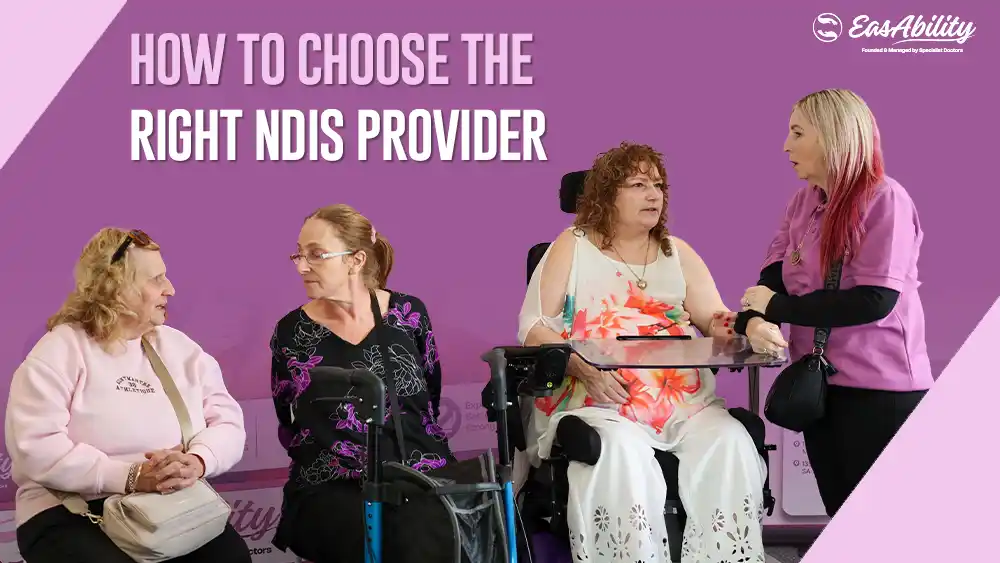
Choosing an NDIS provider is one of those decisions that has zero room for error, because you are determining your support system for daily life. It’s not merely about choosing a manager who’ll deliver services but a trusted partner who’ll help you achieve your goals, build independence, and improve your quality of life. The wrong choice will not lead to financial loss, but you will also lose independence.
Now, there are many options available, yet choosing a trusted NDIS provider in Adelaide can be difficult because almost everyone offers similar services on paper, but they may not provide the same level of service, care, or flexibility. And when it comes to support and independence, the difference really shows up.
That’s why, to find a provider that genuinely puts you at the centre of your care, you have to look beyond brochures and websites. Let’s walk you through this guide so you can make a confident and informed decision when choosing the right partner.

Key Factors For Choosing an NDIS Provider
Understand Your NDIS Plan
Before choosing a provider, make sure you understand the type of support your NDIS plan includes and the goals you want to achieve.
You should be aware of
- Your NDIS goals
- The supports and funding categories that your plan supports
- Whether it’ll be self-managed, plan-managed, or NDIA-managed
Knowing exactly what you need will help you choose a partner with the right experience and services, so they can support you throughout that journey.
Registered Vs Unregistered NDIS Provider
Understand how your NDIS funding is important because not all participants can access every type of provider. It is widely dependent on your funding plans:
Mandatory Use of Registered Providers
Agency-Managed (NDIA-Managed): Under this arrangement, the NDIA pays your providers directly, and you are strictly limited to registered providers only. These providers met the quality and safety standards set by the NDIS Quality and Safeguards Commission and undergo regular audits.
Optional Use of Registered Providers
You may have greater flexibility and can often choose between registered and unregistered NDIS providers. If your plan is :
- Plan-managed: When a registered Plan Manager pays your providers.
- Self-managed: The category where you have to pay your provider directly
Understanding your funding arrangement early helps you narrow your options and avoid spending time researching providers that aren’t suitable for you.
Research Local Providers
Instead of immediately selecting the first provider you find, compare a few providers in Adelaide who understand the local services and community resources.
You can ask:
- Your NDIS contact, support coordinator, or recovery coach for help.
- Consult with any of your family members or friends for recommendations.
- Look at providers’ reviews and testimonials.
- Compare local providers’ services, community resources, and their level of experience.
Set up an Initial Meeting
It’s always a good idea to arrange a meeting with your provider before signing a service agreement. It’ll help you understand how a provider works and whether you can coordinate well with them.
You can observe the following during the meeting:
- How clearly you both can communicate
- If they are paying attention to your goals
- The type of support you’ll get from them
- Discuss the Terms of Service Agreement.
Trust is an important part of the process, and meeting a provider will make it easier to see if you can trust them.
Compare Your Options Before Signing
It is important to compare the providers you have selected before you make your final decision.
It is important that you take price into consideration, but it shouldn’t be the primary influence on your decision. A provider that communicates well, offers reliable support, and understands your goals may provide better support even if they are not the most economical option.
What to Look for in an Ideal NDIS Provider
Not all providers offer what they have mentioned, so once you narrow down your options, take some time to investigate. You can’t rely on what the companies claim to offer on their websites. They can all sell you on quality care, but the daily experiences offered to participants are what really distinguishes one provider from another.
Below are a number of features that you might consider.
Services Aligned with Support Needs
Each NDIS provider specialises in offering a set of services. That’s perfectly fine, but they should be aligned with the services you’ll require to meet not only your current goals, but also to meet future goals.
To illustrate, you may require assistance with daily personal care, and later on may require support with accessing the community, transport assistance, and/or respite care. Choosing a provider with a wide range of support services will make your NDIS journey easier as you won’t have to switch providers with every change in your circumstances.
In addition to the supports offered in your NDIS plan, consider if the provider:
- Works with participants with similar needs and/or goals.
- Has the capacity to offer different services as your support needs change.
- Takes the time to really understand your goals, instead of merely aiming to meet your needs
- The goal is to select a provider that will help you with your journey, whereas the rest will require you to make adjustments to your supports around the services.
Compassionate Support Workers
You spend a great deal of time with your support worker. It is important that you feel comfortable and understood with them. They play a large part in helping you achieve your goals. The best support workers are those who genuinely care, offering their time and compassion beyond their formal qualifications and experience.
A good provider is committed to recruiting, training and supporting staff with the right skills and the right attitude.
When you are speaking to a provider, ask them if their support workers:
- Are qualified, experienced and screened appropriately.
- Are chosen to match your needs, preferences and personality.
- Respect your independence, your routines, and personal choices.
- Provide the most consistent support possible.
- Encourage you to develop the confidence to try new skills.
When the people who support you are trusted, you can focus on your goals and not care about your most daily needs.
Person-Centric Approach
A person-centred approach considers what matters most to you, be it independence, employment, social integration, or simply improving confidence. Your provider should not make you conform to their model, but should design and offer supports that are around your lifestyle and goals.
Examples of good practice include:
- Involving you in planning and reviewing your supports
- Taking time to understand your goals before offering supports
- Being responsive to your culture, preferred communication, and personal choice
- Adapting supports based on your changing needs and goals
- Aiming to make you independent, instead of dependent on their support
Your choice and control when using the NDIS remains the priority, and your provider should help you exercise that.
Transparency and Flexibility
Things do not always go to plan. Ask how your provider manages unexpected situations such as last-minute schedule changes or when a regular support worker is unavailable. You should be able to find clear answers, as this makes stressful events much easier to cope with.
When comparing providers, consider if they:
- Answer calls and emails in a reasonable time
- Inform you of any changes to your supports
- Have clear, easy-to-follow processes
- Have clear, easy-to-follow processes for unexpected support worker absences
- Offer after-hours support relevant to your needs
Transparent Service Agreements
The delivery and cost of your NDIS supports are critical to understand the NDIS. A provider you can trust will answer your pricing questions and ensure you understand your Service Agreement before providing the support.
The following are indicators of a quality provider:
- Pricing is explained in the context of the NDIS pricing framework.
- They clearly communicate cancellation policies, travel costs or any additional costs if required.
- Service agreement should be written in plain language that’s easy to understand
- They encourage you to ask questions before you sign.
Local Community Connections
Choosing an NDIS provider who operates within your local community of Adelaide can be beneficial for reasons that extend beyond convenience. A provider who is able to navigate their local community is in a better position to connect you to the services and activities that will assist you in achieving your personal goals.
Local community connections can enhance your NDIS experience by providing additional access to community programs, local healthcare, and participation in your newly established local community.
Red Flags to Watch Out For
Finding the right NDIS provider isn’t just about looking for positive qualities; it’s also about recognising the warning signs. If you notice any of the following during your conversations, it may be worth exploring other options before committing.
The absence of positive characteristics you have identified in a provider is an indicator to reject that provider. The following are some of the most common red flags:
- Slow communication or slow responses to your questions.
- Being pressured into signing a service agreement when you don’t feel ready
- Uncertainty around costs, hidden fees, and/or vague descriptions of how your NDIS funding will be broken down.
- Abrupt changes to your support worker, making consistency and trust difficult.
- Generalised support with no consideration for individuals.
- Limited support when your goals or circumstances change.
- An emphasis on funded hours used vs the fulfilment of significant goals.
During this process, you should feel comfortable, valued, and sure about your service provider. If you are having any concerns during this stage of the process, the best approach is to continue your search. The decision is too important to your well-being, and you shouldn’t settle for anything less than the best.
Can You Change Your NDIS Provider?
Yes, you can change your NDIS provider. NDIS is all about choice and control, which is why you have the right to move to a different support provider if the one you are currently with is not providing the supports you need.
It could be for any reason, whether you have decided to switch to someone who offers different methods of support, or you have simply changed your goals and need a new provider for that. Whatever the reason, you don’t have to stay with someone who no longer works for you.
Before making the switch, it’s a good idea to:
- Review your current service agreement.
- Be aware of the notice period.
- Inform the current provider.
- Collaborate with the new provider to ensure continuity of service.
Changing providers seems like a big step, but the right provider should support you working towards your goals without any disruption.
Why Choose EasAbility as Your NDIS Provider in Adelaide?
Finding an NDIS provider is not an easy task and is a lot more than merely selecting a provider who can deliver services. It is about finding a team that can support you with your goals and your choice in a manner that gives you the right to live on your own terms.
At EasAbility, that’s exactly what we help you with.
We strive to get to know what matters to you and what your goals and aspirations are. We align our services and supports to your individual needs and goals. Our experienced team offers you the support you need for personal care, community access, respite, transportation, support for daily living, and more.
As an NDIS provider in Adelaide, we deliver our services with a strong focus on person-centred care, aligning participants with suitable support workers, and assisting you to develop greater independence and to build your confidence.
If you’re looking for an NDIS provider that puts your goals first, contact us to tell us about your needs and to find out how we can support you to achieve your NDIS goals.
FAQs
1- How do I choose the right NDIS provider in Adelaide?
Choosing the appropriate NDIS provider in Adelaide begins with understanding your NDIS plan and the support services you can get. Based on that, once you approach the providers, compare the service each provider offers in terms of experience, communication, flexibility, pricing, and overall reputation. It’s best to meet the provider before signing a service agreement.
2- What's the difference between a registered and an unregistered NDIS provider?
Registered NDIS providers have gone through an assessment of the quality and safety standards by the NDIS Commission. For participants with an NDIA-managed plan, it is a requirement to use a registered NDIS service provider. For people with a plan managed or self-managed plan, it is possible to use unregistered service providers as well.
3- Can I change my NDIS provider at any time?
You can change your NDIS provider at any time. NDIS policy gives participants flexibility to determine whether service providers meet their needs. Before changing a provider, it is important to understand the service agreement to identify if there is a notice period that needs to be observed.
4- What should I look for before signing a service agreement?
Understand the services, costs, cancellation policies, responsibilities, and notice periods represented in the contract. Ask questions if you have them.
5- Can I use more than one NDIS provider?
Yes. It is very common for NDIS participants to have multiple providers for different support needs. For example, personal care support might come from one provider, while allied health or community participation support comes from different providers.
6- What should be included in an NDIS service agreement?
NDIS service agreements should outline the supports, frequency, cost, cancellation policies, responsibilities, and the process and policies for amending or ending the agreement.
7- How do I know if an NDIS provider is reliable?
Look for providers with experienced support workers, positive participant reviews, transparent communication, clear pricing, and consistent service delivery. It’s also worth asking how they manage staff absences and unexpected changes to ensure your supports remain uninterrupted.
8- Does my funding arrangement affect which provider I can choose?
Yes. NDIA-managed participants generally need to use registered providers, while plan-managed and self-managed participants often have greater flexibility to choose between registered and unregistered providers. Understanding your funding arrangement will help you narrow down your options.
EasAbility Care – General Information Disclaimer
The information provided on this page is for general informational purposes only and does not constitute professional, legal, medical, or NDIS advice. While reasonable efforts are made to ensure the accuracy of the content, EasAbility Care makes no representations or warranties regarding the completeness, reliability, or suitability of the information provided.
Please note:
- EasAbility Care provides a range of disability support services designed to assist NDIS participants in achieving their goals, increasing independence, well-being, and community participation.
- EasAbility Care offers various NDIS-related supports, and the availability of specific services may vary depending on individual circumstances, funding, and location.
- Eligibility for NDIS funding and related supports is determined solely by the National Disability Insurance Agency (NDIA) based on a participant’s individual needs, goals, and assessments.
- Access to services, funding approvals, and support arrangements may vary depending on a participant’s NDIS plan and personal circumstances.
- Users should seek independent advice from the NDIA, Support Coordinators, Support Workers, Psychiatrists, Psychologists, General Practitioners, or other qualified professionals before making decisions based on the information available on this website.
To the maximum extent permitted by law, EasAbility Care accepts no liability for any loss or damage arising from reliance on the information contained on this website. This disclaimer may be updated at any time without notice.