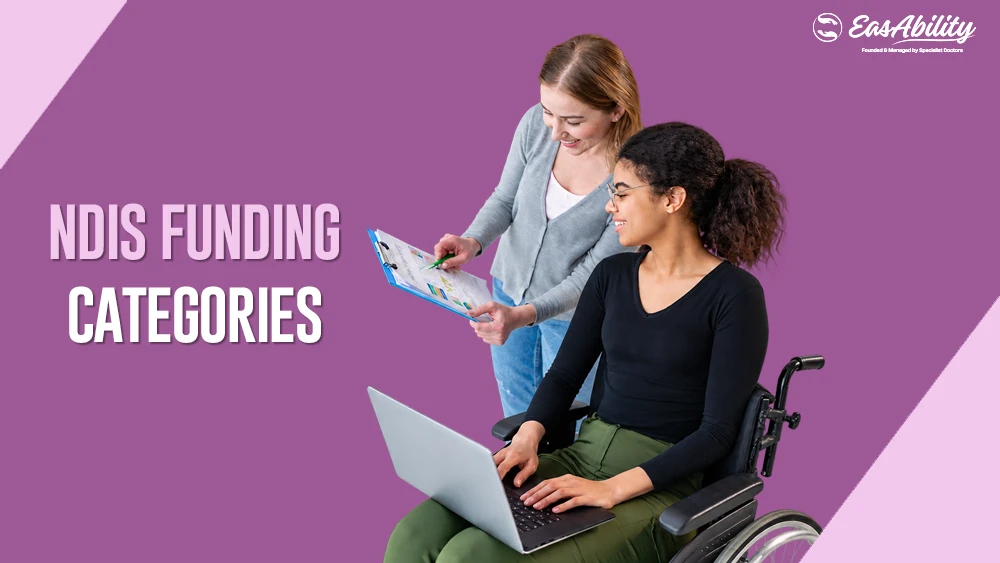
Many people receive their first NDIS plan feeling excited, only to realise they aren’t entirely sure what all the funding categories mean. Terms like Core Supports, Capacity Building, and Capital Supports can seem confusing, especially when you’re trying to work out what you can spend your funding on.
Understanding your NDIS funding categories is one of the best ways to make the most of your plan. Each budget has a different purpose, rules, and level of flexibility. Knowing the difference can help you avoid common mistakes, reduce the risk of rejected claims, and ensure you’re using your funding to achieve your goals.
This guide explains how NDIS funding works, breaks down the three main NDIS funding categories, and answers common questions about flexibility, line item codes, and moving funds between budgets.

Key Takeaways
- Every NDIS plan has three main funding categories: Core Supports, Capacity Building Supports, and Capital Supports.
- Each funding category has a different purpose and spending rules.
- Core Supports are generally the most flexible budget.
- Capacity Building funding helps participants build long-term independence.
- Capital Supports fund larger purchases such as assistive technology and home modifications.
- Understanding your plan can help you avoid funding mistakes and make the most of your NDIS budget.
What Are NDIS Funding Categories?
The National Disability Insurance Scheme (NDIS) doesn’t provide participants with one large pool of money to spend however they choose. Instead, every plan is divided into separate NDIS funding categories, with each category designed for a specific purpose.
These categories help ensure participants receive the right supports while keeping funding aligned with their NDIS goals.
The three main funding categories are:
Funding Category | Purpose | Flexibility |
Core Supports | Everyday assistance and daily living supports | Usually flexible |
Capacity Building Supports | Developing skills and independence | Usually fixed |
Capital Supports | Equipment, technology, and home modifications | Fixed |
Each category has its own rules, so it’s important to understand what each budget is intended for before making purchases or booking services.
Core Supports
For many participants, Core Supports NDIS funding is the largest and most frequently used part of their plan.
Core Supports help participants complete everyday activities and improve their quality of life. Rather than focusing on long-term skill development, this funding meets day-to-day support needs.
Depending on your plan, Core Supports may cover services such as:
- Personal care and daily living assistance
- Household cleaning
- Meal preparation
- Community participation
- Transport supports
- Consumables
- Support workers
- Assistance with shopping
- Support to attend appointments
One of the biggest advantages of Core Supports is that many participants can use this funding flexibly. If your plan is self-managed or plan-managed, and your funding is marked as flexible, you may be able to use available funds across eligible Core Support budgets where needed.
However, flexibility depends on your individual NDIS plan, so it’s always important to check your funding before making decisions.
Core Supports Sub-Categories
The Core Supports budget is divided into several smaller categories, each covering different types of everyday support.
Assistance with Daily Life
This category funds personal assistance with everyday activities that you may not be able to complete independently.
Examples include:
- Showering and dressing
- Personal hygiene
- Meal preparation
- Household cleaning
- Laundry
- Overnight support where approved
These supports help participants live as independently as possible while maintaining their health and wellbeing
Consumables
Consumables are everyday disability-related items that participants use regularly.
Examples include:
- Continence products
- Wound care supplies
- Disposable gloves
- Low-cost assistive products
- Daily living aids
These purchases must relate directly to your disability and be considered reasonable and necessary under the NDIS.
Assistance with Social and Community Participation
Community involvement is an important part of living an independent and fulfilling life.
Funding in this category may cover support workers who assist participants to:
- Attend social events
- Visit family and friends
- Participate in community groups
- Join sporting activities
- Attend recreational programs
- Access education or volunteering opportunities
The goal is to increase social inclusion while helping participants build confidence and independence.
Transport
Some participants receive transport funding if their disability makes it difficult to use public transport independently.
Transport funding may help cover travel costs associated with:
- Work
- Education
- Community activities
- Medical appointments
- Therapy sessions
Eligibility and funding amounts depend on each participant’s circumstances and plan.
How to Use NDIS Core Supports Funding
One of the most common questions participants ask is how they can use their Core Supports funding effectively.
The answer depends on your individual plan, but generally, Core Supports are intended for everyday assistance that helps you live more independently.
Examples of eligible purchases may include:
- Support worker services
- Personal care assistance
- Household cleaning
- Gardening where related to disability
- Meal preparation assistance
- Community access support
- Transport supports
- Disability-related consumables
However, the NDIS generally won’t fund some items.
These usually include:
- Groceries
- Rent or mortgage payments
- Utility bills
- General household expenses
- Entertainment costs
- Holidays
- Items unrelated to your disability
If you’re unsure whether a purchase is covered, check with your plan manager or support coordinator before spending your funding to avoid unexpected issues.
Understanding the Consumables Budget and the "$1500 Rule"
The Consumables budget is one of the most misunderstood areas of Core Supports NDIS funding.
Consumables are everyday disability-related products used regularly and replaced over time. These items are generally lower-cost than major assistive technology.
Many participants also hear about the so-called “$1500 rule.” In practice, this usually relates to lower-risk assistive technology purchases under current NDIS guidance. However, the applicable rules can vary depending on the item, your plan, and current NDIS policies.
For this reason, participants should avoid assuming that every purchase under $1500 is automatically approved.
If you’re purchasing assistive technology or specialised equipment, it’s always worth checking the current NDIS guidelines or speaking with your plan manager before making a purchase.
Capacity Building Supports
While Core Supports help participants manage everyday life, Capacity Building Supports NDIS funding focuses on building skills that improve long-term independence.
Rather than funding ongoing daily assistance, these supports help participants build the confidence, knowledge, and abilities needed to achieve their goals.
Depending on your plan, Capacity Building funding may support:
- Therapy services
- Employment support
- Skill development
- Behaviour support
- Improved daily living skills
- Support coordination
- Relationship building
- Education and training
Unlike Core Supports, Capacity Building funding is generally allocated to specific categories and usually cannot be moved between budgets.
This means participants should understand how each category works so they can make the most of the funding available before their plan ends.
9 Capacity Building Support Categories
Capacity Building funding is divided into nine separate categories, each designed to help participants work towards greater independence.
Category | Purpose |
Support Coordination | Helps participants understand and implement their NDIS plan. |
Improved Living Arrangements | Supports finding and maintaining suitable housing. |
Increased Social and Community Participation | Builds confidence and social skills. |
Finding and Keeping a Job | Employment-related support and workplace skills. |
Improved Relationships | Behaviour support and relationship development. |
Improved Health and Wellbeing | Exercise, nutrition and wellbeing supports where appropriate. |
Improved Learning | Assistance with educational goals. |
Improved Life Choices | Plan management and financial administration support. |
Improved Daily Living | Therapy and assessments that improve functional skills. |
Each category has a specific purpose, and funding generally needs to be used for that intended support.
Capital Supports
The third major NDIS funding category is Capital Supports. This funding is intended for higher-cost items that help participants improve their independence, safety or mobility.
Unlike Core Supports, Capital Supports are generally not flexible. The funding is allocated for specific supports approved in your NDIS plan and can’t usually be spent on other services or equipment.
Examples of Capital Supports NDIS funding include:
- Wheelchairs and mobility aids
- Communication devices
- Prosthetics and orthotics
- Hearing equipment
- Home modifications
- Vehicle modifications
- Specialised disability equipment
- Assistive technology
A qualified health professional often recommends these supports to ensure they match your disability-related needs.
Capital Supports Approval Process
Many participants wonder whether they can simply purchase equipment using their Capital Supports budget. In most cases, the answer is no.
For higher-cost supports, the NDIS may require additional evidence before approving funding. This helps ensure the equipment is reasonable, necessary and represents value for money.
Depending on the type of support, you may need:
- An assessment from an occupational therapist or another allied health professional
- A written report explaining why the support is needed
- Quotes from one or more suppliers
- Supporting documentation showing how the equipment will help you achieve your NDIS goals
- Approval from the NDIA before the purchase is made
For example, if you’re requesting a customised wheelchair or home modifications, you’ll usually need professional assessments and supplier quotes before funding can be released.
Because every participant’s circumstances are different, it’s always best to check your individual plan or speak with your plan manager before arranging major purchases.
Core Supports vs Capacity Building Supports
Understanding the difference between NDIS Core vs Capacity Building funding is one of the most important parts of managing your plan.
Although both budgets provide valuable support, they serve different purposes.
Core Supports | Capacity Building Supports |
Helps with everyday living | Helps build long-term independence |
Usually offers greater flexibility | Usually allocated to specific categories |
Covers daily assistance | Covers skill development and therapies |
Supports immediate needs | Focuses on future goals |
May include support workers, transport and consumables | May include therapy, employment support and support coordination |
A simple way to think about it is:
- Core Supports help you today.
- Capacity Building Supports help you tomorrow.
Both categories play an important role in helping participants live more independently and achieve their goals.
Can I Move Money Between NDIS Funding Categories?
One of the most common questions participants ask is whether they can move money between funding categories if they don’t use their full budget.
The answer depends on your NDIS plan.
In many cases:
- Some Core Supports budgets are flexible, allowing you to use funding across eligible Core categories.
- Capacity Building funding is generally fixed and can’t be transferred to another Capacity Building category or to Core Supports.
- Capital Supports funding is allocated for approved items and usually can’t be moved to another category.
If you’re unsure about your funding flexibility, your plan manager or the NDIA can explain how your individual plan works.
NDIS Flexible Funding
Many participants hear the phrase NDIS flexible funding, but not every budget in an NDIS plan is flexible.
Here’s a simple overview:
Funding Category | Flexible? |
Core Supports | Often flexible within eligible Core categories |
Capacity Building | Usually not flexible |
Capital Supports | Not flexible |
Even within Core Supports, flexibility depends on how you prepared your plan. Some participants have stated supports that must be used for a particular purpose.
Always review your plan before assuming you can use funds elsewhere.
Understanding NDIS Support Catalogue Line Item Codes
Every NDIS-funded support has a corresponding Support Catalogue line item code.
These codes help providers claim payment correctly and ensure supports are charged against the appropriate funding category.
Participants don’t need to memorise line item codes, but understanding what they are can be useful when:
- Reviewing invoices
- Checking service agreements
- Comparing provider quotes
- Tracking spending
- Discussing services with your plan manager
If something doesn’t look right on an invoice, your provider or plan manager can explain which line item has been used and why.
Common NDIS Funding Categories Mistakes to Avoid
Understanding your funding categories can help you avoid unnecessary delays, claim rejections, and unused funds.
Some common mistakes include:
Assuming all Core funding is interchangeable
While many Core Supports are flexible, you can’t move every budget freely. Always check your plan first.
Buying items that aren't funded
The NDIS generally won’t pay for everyday living expenses that aren’t directly related to your disability.
Forgetting about quote requirements
Higher-cost assistive technology and home modifications often require professional assessments and supplier quotes before approval.
Leaving Capacity Building funding unused
Because Capacity Building budgets are usually fixed, unused funding may simply expire when your plan ends.
Not checking your budget regularly
Monitoring your spending throughout the year can help you avoid running out of funding early or leaving significant amounts unspent.
Not asking questions
If you’re unsure whether something is covered, asking before making a purchase can save time and prevent funding issues.
How Plan Management Can Help
Managing an NDIS plan involves more than simply paying invoices. Participants also need to understand funding categories, monitor their budgets, and ensure supports are claimed correctly.
A registered NDIS plan management provider can help by:
- Paying provider invoices on your behalf
- Tracking your available funding
- Providing regular budget updates
- Explaining funding categories
- Helping you understand service agreements
- Reducing paperwork and administrative tasks
If you’re looking for NDIS plan management in Adelaide, working with an experienced local provider can make it easier to understand your funding and use your plan with confidence.
Similarly, choosing an experienced NDIS Core Supports provider in Adelaide can help ensure you’re receiving services that align with your goals and approved funding.
Conclusion
Understanding NDIS funding categories is an important step towards getting the most value from your plan. While Core Supports help with everyday living, Capacity Building Supports focus on developing long-term independence, and Capital Supports fund larger disability-related purchases and equipment.
Understanding how each funding category works can help you make informed decisions, avoid common mistakes, and ensure your funding supports your goals. If you’re ever unsure about what your plan covers or how to manage your budget, seeking advice from your plan manager, support coordinator, or the NDIA can help you use your NDIS funding with confidence.
Frequently Asked Questions
What are the three NDIS funding categories?
Every NDIS plan is divided into three main funding categories: Core Supports, Capacity Building Supports, and Capital Supports. Each category funds different types of disability-related supports.
What are Core Supports?
Core Supports help participants with everyday activities such as personal care, household tasks, transport, consumables, and community participation.
What are Capacity Building Supports?
Capacity Building Supports help participants build skills, independence, and confidence through services such as therapy, employment support, and support coordination.
What are Capital Supports?
Capital Supports fund higher-cost disability-related items, including assistive technology, wheelchairs, home modifications and specialised equipment.
Can I move money between NDIS funding categories?
Generally, some Core Supports budgets are flexible, while Capacity Building and Capital Supports usually can’t be transferred between categories. The exact rules depend on your individual NDIS plan.
What can I buy with Core Supports funding?
Depending on your plan, Core Supports funding may cover personal care, support workers, household assistance, transport, community participation, and disability-related consumables.
Do Capital Supports require quotes?
Many higher-cost Capital Supports require professional assessments and supplier quotes before approval. Requirements depend on the type of support requested.
What are NDIS line item codes?
Line item codes are reference numbers providers use to claim payment for approved NDIS supports. They help ensure claims are processed under the correct funding category
EasAbility Care – General Information Disclaimer
The information provided on this page is for general informational purposes only and does not constitute professional, legal, medical, or NDIS advice. While reasonable efforts are made to ensure the accuracy of the content, EasAbility Care makes no representations or warranties regarding the completeness, reliability, or suitability of the information provided.
Please note:
- EasAbility Care provides a range of disability support services designed to assist NDIS participants in achieving their goals, increasing independence, well-being, and community participation.
- EasAbility Care offers various NDIS-related supports, and the availability of specific services may vary depending on individual circumstances, funding, and location.
- Eligibility for NDIS funding and related supports is determined solely by the National Disability Insurance Agency (NDIA) based on a participant’s individual needs, goals, and assessments.
- Access to services, funding approvals, and support arrangements may vary depending on a participant’s NDIS plan and personal circumstances.
- Users should seek independent advice from the NDIA, Support Coordinators, Support Workers, Psychiatrists, Psychologists, General Practitioners, or other qualified professionals before making decisions based on the information available on this website.
To the maximum extent permitted by law, EasAbility Care accepts no liability for any loss or damage arising from reliance on the information contained on this website. This disclaimer may be updated at any time without notice.