Finding suitable housing can be difficult when a person has significant disability-related needs. A standard rental property may not have the space, accessibility features, or design needed to make everyday life safe and manageable.
This is where Specialist Disability Accommodation (SDA) can help.
SDA is a type of NDIS housing designed for people with very high support needs or an extreme functional impairment. The homes are purpose-built or specially designed with features that can make it easier for eligible participants to live more safely and independently.

But SDA is not simply another name for disability housing, and having an NDIS plan does not automatically mean someone can receive SDA funding. So, what exactly is SDA, who is it for, and how does the funding work?
There is a lot to understand about SDA, including who can access it, how SDA funding works, and what to look for in a suitable home. In this guide, we explain the key things NDIS participants and their families need to know about SDA.
What Is Specialist Disability Accommodation (SDA)?
Specialist Disability Accommodation (SDA) is housing designed for people with significant disability-related needs who may find a standard home difficult to live in safely or comfortably.
SDA properties are designed with these needs in mind from the start. Depending on the property, they may include features such as step-free access, wider doorways, accessible bathrooms, home automation or provisions for equipment such as ceiling hoists.
There are four SDA design categories, each covering different accessibility and support requirements. The category helps determine the features and design standards a property needs to meet.
This means SDA is more than simply finding a home with a few accessibility features. The property needs to be designed and built to meet specific SDA requirements and be suitable for the people it is intended to support.
Who Is SDA Housing Designed For?
SDA is intended for a relatively small proportion of NDIS participants who have particularly significant disability-related housing needs.
Generally, a person may be considered for SDA if they have an extreme functional impairment or very high support needs and meet the relevant NDIS eligibility requirements.
For some people, a standard home may be difficult to use safely. Others may need specialised features due to mobility limitations, communication needs, behavioural risks, or the level of assistance required in daily life.
The purpose of SDA is to provide a suitable physical environment that supports a person’s safety, independence, and quality of life.
Does Everyone With a Disability Qualify for SDA?
No. Being an NDIS participant does not automatically make someone eligible for SDA. Eligibility depends on the individual’s circumstances, functional needs and the NDIS requirements for SDA funding.
Evidence from relevant health or disability professionals may also be required to demonstrate why specialised accommodation is appropriate.
If you are unsure whether SDA could be suitable, it is better to discuss your circumstances with the NDIS or an appropriately qualified professional rather than assuming that you will qualify.
How Does SDA Funding Work?
One of the most common misunderstandings about SDA is that the NDIS simply pays a participant’s rent. That’s not quite how it works.
SDA funding is intended to contribute towards the cost of providing specialised housing. When SDA funding is included in a participant’s NDIS plan, it is generally paid to the SDA provider for the housing component. Participants still have personal living costs to consider, including their ordinary rent contribution and day-to-day expenses.
SDA funding also does not automatically cover all the support a person might need at home. For example, personal care or assistance with daily activities is separate from the physical accommodation itself. This is why it is useful to think of SDA as the specialised home, rather than the complete package of support a person receives.
What Types of SDA Accommodation Are Available?
SDA properties are built or designed to meet different levels of accessibility and support requirements. There are four main SDA design categories.
Improved Liveability
These homes include design features that make them easier to navigate and use for people with certain sensory, intellectual, or cognitive needs.
Fully Accessible
These properties are designed for people who require a high level of physical accessibility. Features may include accessible entrances, bathrooms and living areas.
High Physical Support
These homes are designed for people with significant physical support needs. They can include features such as ceiling hoists, assistive technology and other provisions that support complex physical needs.
Robust
Robust SDA is designed for people who may have behaviours of concern that could create a risk to themselves, other residents or the property.
The appropriate category depends on the participant’s individual circumstances and approved SDA requirements. SDA homes can also vary in their building type and size. One participant might live in an SDA apartment, while another might live in a house or villa.
How Do You Get SDA Funding Through the NDIS?
Getting SDA generally involves more than simply finding a property you like.
The process may involve:
- Understanding your housing needs: Consider whether your current home is unsuitable because of your disability-related needs.
- Gathering supporting evidence: Relevant professionals may need to provide information about your functional impairment and housing requirements.
- Discussing SDA with the NDIS: Your circumstances can be considered as part of your NDIS planning process.
- Receiving an SDA decision: If approved, SDA funding may be included in your NDIS plan.
- Finding suitable accommodation: You can then look for an SDA property that matches your approved requirements, location preferences and circumstances.
It is important not to choose a property based solely on photographs or its advertised features. The home needs to be appropriate for the participant’s approved needs.
How to Find SDA Housing in Australia
Once SDA funding is approved, finding the right property can take some time.
There may be several factors to consider, including:
- Location and proximity to family or community
- SDA design category
- Accessibility features
- Number of residents
- Bedroom and bathroom arrangements
- Access to transport and local services
- Availability of suitable vacancies
- Provider experience and communication
- Whether the property is appropriate for your individual needs
A home can have excellent accessibility features but still not be the right fit if it is too far from the person’s support network or does not suit their preferred living arrangements.
SDA Housing in Adelaide
People searching for SDA housing in Adelaide, EasAbility can help you find properties across different suburbs and design categories. Availability can change, so it is worth comparing individual properties rather than assuming that every SDA home will meet the same needs.
If you are looking for NDIS housing Adelaide, make sure you check whether the property is actually SDA and whether its design category matches the participant’s approved requirements.
SDA Housing in Melbourne
There is also a range of SDA housing options in Melbourne, including apartments and other specialised properties.
For someone considering SDA apartments, location can be particularly important. Access to public transport, healthcare, shops, and family and community activities can make a significant difference to how practical the home is on a day-to-day basis.
EasAbility can help participants explore their SDA accommodation options and understand the features and arrangements associated with different properties.
How to Choose an SDA Provider
The property is important, but so is the provider behind it.
When comparing SDA providers, consider:
- Whether the provider has experience with your required SDA category
- The quality and accessibility of the property
- How maintenance issues are handled
- Communication and responsiveness
- The location of the property
- The proposed living arrangements
- The terms of the agreement
- What costs you will be responsible for
You should understand what the property offers, what you will pay, who is responsible for maintenance, and how to raise concerns.
Can You Rent an SDA Property Without SDA Funding?
SDA properties are developed specifically under the NDIS SDA framework, and participants generally require appropriate SDA funding to access them as intended. Simply wanting to live in a specialised disability property does not mean that the NDIS will fund it.
If you believe your current housing is unsuitable because of your disability-related needs, speak with the NDIS about whether you may meet the requirements for SDA.
What Does SDA Not Cover?
SDA is focused on the specialised accommodation itself. It does not cover all the costs associated with living independently.
Depending on your circumstances, you may still need to pay for things such as:
- Your ordinary rent or personal contribution
- Groceries and food
- Utilities or other household costs
- Personal items
- Transport
- Support services
SDA also does not automatically include SIL, personal care, or other daily living supports. The exact funding and costs will depend on the participant’s NDIS plan, circumstances and agreements with providers.
Is SDA Right for You?
SDA can make a significant difference for people whose disability-related needs cannot be adequately met by ordinary housing.
It may be worth exploring if:
- Your current home is difficult or unsafe to use
- You have very high support needs or an extreme functional impairment
- You require specialised accessibility features
- A purpose-designed home could improve your independence
- You may meet the NDIS requirements for SDA funding
However, the decision is not simply about whether you would prefer a more accessible home. Your functional needs and the NDIS’s SDA requirements need to be considered.
How EasAbility Can Help With SDA
Finding suitable SDA accommodation can involve more than locating an available property. The home needs to match the participant’s needs, approved funding and preferred living arrangements.
At EasAbility, we can help NDIS participants explore Specialist Disability Accommodation options that are suited to their individual circumstances. Our team can provide information about available SDA options, help you understand the accommodation process and support you in finding a suitable housing solution.
If you are exploring SDA housing in Adelaide or need guidance about your NDIS housing options, contact us to discuss your requirements.
Conclusion
Specialist Disability Accommodation provides purpose-designed housing for NDIS participants with significant disability-related housing needs. SDA homes can include apartments, houses, villas, and other properties designed to meet different accessibility and support requirements.
The most important thing to remember is that SDA is about the home itself. It is different from SIL and other disability supports, which may provide assistance with everyday living.
If you are considering SDA, take time to understand your eligibility, compare suitable SDA homes and look carefully at the property’s design, location and provider before making a decision.
Frequently Asked Questions
1. What is SDA in the NDIS?
SDA stands for Specialist Disability Accommodation. It is specialised housing designed for NDIS participants with very high support needs or an extreme functional impairment who meet the relevant eligibility requirements.
2. Who is eligible for SDA housing?
SDA is generally intended for NDIS participants with an extreme functional impairment or very high support needs who meet the NDIS’s SDA funding requirements. Eligibility depends on individual circumstances.
3. Does the NDIS pay for SDA housing?
The NDIS can provide SDA funding for eligible participants. This funding contributes towards the cost of the specialised accommodation, while participants may still have personal rent and living costs.
4. What is the difference between SDA and SIL?
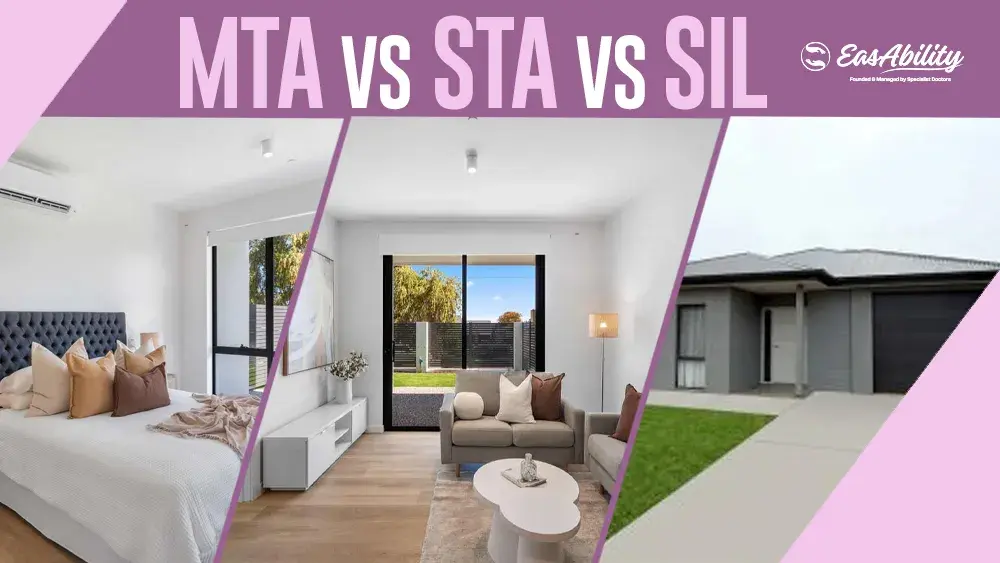
SDA refers to the specialised physical home, while SIL refers to supports that can help a person with everyday living and independence. They can be used together but are separate supports.
5. What types of SDA properties are available?
SDA can include apartments, houses, villas, duplexes and group homes. Properties are also designed under categories such as Improved Liveability, Fully Accessible, High Physical Support and Robust.
6. Can I choose where my SDA home is located?
Location can be considered when choosing an SDA property, although available properties may be limited. Factors such as proximity to family, transport, services and community can help guide the choice.
7. Can I live with other people in an SDA home?
Yes. Some SDA properties are designed for shared living, while others provide more independent arrangements. The right option depends on the participant’s needs and preferences.
8. How do I find SDA accommodation in Adelaide or Melbourne?
You can search for available SDA properties through SDA providers and housing directories. Compare the property’s location, design category, accessibility features, living arrangements and availability before choosing a home.
EasAbility Care – General Information Disclaimer
The information provided on this page is for general informational purposes only and does not constitute professional, legal, medical, or NDIS advice. While reasonable efforts are made to ensure the accuracy of the content, EasAbility Care makes no representations or warranties regarding the completeness, reliability, or suitability of the information provided.
Please note:
- EasAbility Care provides a range of disability support services designed to assist NDIS participants in achieving their goals, increasing independence, well-being, and community participation.
- EasAbility Care offers various NDIS-related supports, and the availability of specific services may vary depending on individual circumstances, funding, and location.
- Eligibility for NDIS funding and related support is determined solely by the National Disability Insurance Agency (NDIA) based on a participant’s individual needs, goals, and assessments.
- Access to services, funding approvals, and support arrangements may vary depending on a participant’s NDIS plan and personal circumstances.
- Users should seek independent advice from the NDIA, Support Coordinators, Support Workers, Psychiatrists, Psychologists, General Practitioners, or other qualified professionals before making decisions based on the information available on this website.
To the maximum extent permitted by law, EasAbility Care accepts no liability for any loss or damage arising from reliance on the information contained on this website. This disclaimer may be updated at any time without notice.