Ever felt like you need your medications managed and your condition monitored without going to the hospital? This is what community nursing in Australia is all about. You can imagine it like this, coming back home from a surgery and feeling relieved that you are in a familiar place. But you need to be checked multiple times, as your condition is not better.
If you are looking for help in your home, shared accommodation, or local community, then this is where a community nurse comes in. An NDIS participant in Australia can get the required medical support without going to the hospital.
We’ll be discussing the “what’s” about community nursing in this guide, so that you can get a better understanding of what it actually is.

What Is Community Nursing?
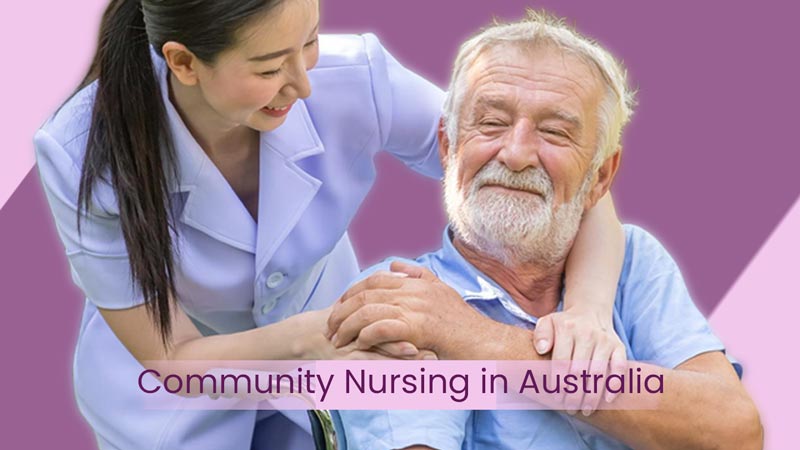
Community nursing is a healthcare service delivered outside medical facilities or hospitals. Instead of going, a community nurse provides care by coming to one’s house, supported independent living (SIL) accommodation, or where they live. There is a clear difference: hospital environments are efficient but unfamiliar. Community healthcare nursing delivers the same clinical services in a place where the individual feels comfortable.
Most of the time, people think a community nurse and a general support worker are the same, but they are not. Helping with general activities, such as meal preparation, is part of a support worker’s work. On the other hand, a community healthcare nurse has clinical qualifications. Examples include Registered Nurses (RNs) and Enrolled Nurses (ENs), who are trained to assess health conditions, manage medications, and make clinical decisions.
Community healthcare nursing is funded through the NDIS Capacity Building support categories, depending on the individual’s health.
What Does a Community Nurse Do?
A community nurse doesn’t have a ward like a hospital nurse does. They move around the community, visiting the participants and their families as well as delivering personalised clinical care.
A community nurse provider like EasAbility provides a wide range of clinical services, including:
- Wound and pressure care that improves healing and lowers the risk of complications.
- Diabetes support that features insulin management and dietary monitoring.
- Catheter and stoma care with proper hygiene and infection prevention.
- Medication management through direct administration and reminders.
- PEG feeding support and nutrition tracking.
- Post-hospital care to help smooth recovery and reduce re-admissions.
The community nurses play a coordinating role by providing a tailored healthcare plan to each individual with the consultation of GPs.
Who Can Access Community Nursing?
A common misunderstanding is that community nursing is only available for aged people, but in reality, that is not the case. Community nursing through NDIS is available for participants of every age, from children with complex medical needs to adults managing lifelong conditions.
You may benefit from community nursing support if you:
- Have complex or ongoing health needs that require regular clinical monitoring or medical care.
- Are returning home after a hospital stay and need continued care and support at home.
- Live in Supported Independent Living (SIL) or shared accommodation and require regular nursing visits.
- Have a chronic condition such as diabetes, heart disease, or a neurological condition that requires ongoing management.
- Have a family member or carer who needs a qualified nurse to help manage the health-related aspects of your care.
- Are adjusting to a new diagnosis and would like a community health nurse to help you understand and manage your care routine.
If you are unsure whether community nursing is covered under your NDIS plan or not, EasAbility is here to help review your funding and connect you with the right support.
What to Expect When You Start Community Nursing?
A typical community nursing service provider’s process is easy. Most providers do not require referral procedures, and all will guide you through the process.
This is what usually happens: initially, you’ll reach out to the provider via phone call or an online form. A team would listen to your needs, answer any questions you have, and assist you through the process.
Then a qualified community health nurse will do an initial assessment by reviewing the patient’s medical history, current health status, goals, and loving environment. Most of them will provide an individual care plan by consulting with the patient, their family, GP, and other healthcare providers. A plan that aligns with the patient’s NDIS goals.
The next step is where care begins: a community nurse who understands the patient’s needs will be chosen. Along with that, their plan is regularly reviewed and adjusted as their health improves, ensuring the right amount of support is provided.
Why Community Nursing Matters?
What if I told you that the impact of community nursing is great? It is true that the speed of recovery gets quicker when you are in a house or SIL with your family.
People who receive healthcare in a known environment experience many other things as well. They include:
- Improved mental health
- Better outcomes
- Fewer hospital re-admissions
What this means for NDIS participants is that they can spend their time with families, engage with the community and pursue their personal goals. So with so many positive outcomes, some credit goes to the community health nurse who chose this path. The same community nurse builds trust by making it easier to ask questions, raise concerns, and stay engaged throughout the journey.
How to Choose the Right Community Nursing Provider?
One of the main concerns of many Australians is choosing the right community nursing provider. This is important for many NDIS participants and their families, as choosing the right provider means receiving high-quality clinical care from nurses who understand your needs.
In order to know that you are choosing the right community nursing provider, this is what you need to do:
Check that they are a registered NDIS provider. They must meet the NDIS Practice Standards and follow the NDIS Code of Conduct. You can also check if they are registered by searching the official NDIS Provider Finder tool.
You can see if their nurses have the relevant qualifications. Since community nursing is a clinical service, the person should have the relevant credentials. You can ask if their team has Registered Nurses (RN) or Enrolled Nurses (EN), and who is coming to meet you.
Look for experience that aligns with your condition. What you may do is contact the provider, first tell them about your health conditions, and ask whether the nurses have any experience in that specific area.
FAQs
Q1: Who can get community nursing services in Australia?
NDIS participants of any age, people with chronic conditions, post-hospital patients, or those needing regular clinical monitoring can access these services.
Q2: Does community nursing replace a GP?
No. Community nurses work alongside GPs to provide ongoing care, manage medications, and monitor health conditions.
Q3: Is community nursing covered under NDIS?
Yes, many community nursing services fall under NDIS Capacity Building supports, depending on your plan and individual needs.
Q4: How often does a community nurse visit?
Visits depend on individual needs and care plans. Some people may receive daily visits, others weekly or as required.
Conclusion
Community nursing provides personalised care that helps patients recover faster while staying in their familiar environment. Even the community nurses feel better, as they can see firsthand their patients getting better and becoming independent.
If you are an NDIS participant seeking health support, a family member seeking medical help for their loved ones, or a nurse ready to take the next career step, community healthcare nursing services are the answer.
EasAbility Care – General Information Disclaimer
The information provided on this page is for general informational purposes only and does not constitute professional, legal, or NDIS advice. While reasonable efforts are made to ensure accuracy, EasAbility Care makes no representations or warranties regarding the completeness, reliability, or suitability of the information.
Please note:
- EasAbility Care supports NDIS participants by assisting them to explore suitable accommodation options and other disability supports.
- EasAbility Care provides SIL services, community participation, and other NDIS-related supports.
- EasAbility Care may not own, manage, or directly provide Specialist Disability Accommodation (SDA) housing and usually works with registered SDA providers to help identify appropriate options.
- Eligibility for SDA and related supports is determined solely by the National Disability Insurance Agency (NDIA).
- Users should seek independent advice from the NDIA, Support Coordinators, or other qualified professionals before making decisions based on this information.
To the maximum extent permitted by law, EasAbility Care accepts no liability for any loss or damage arising from reliance on the information contained on this website. This disclaimer may be updated at any time without notice.