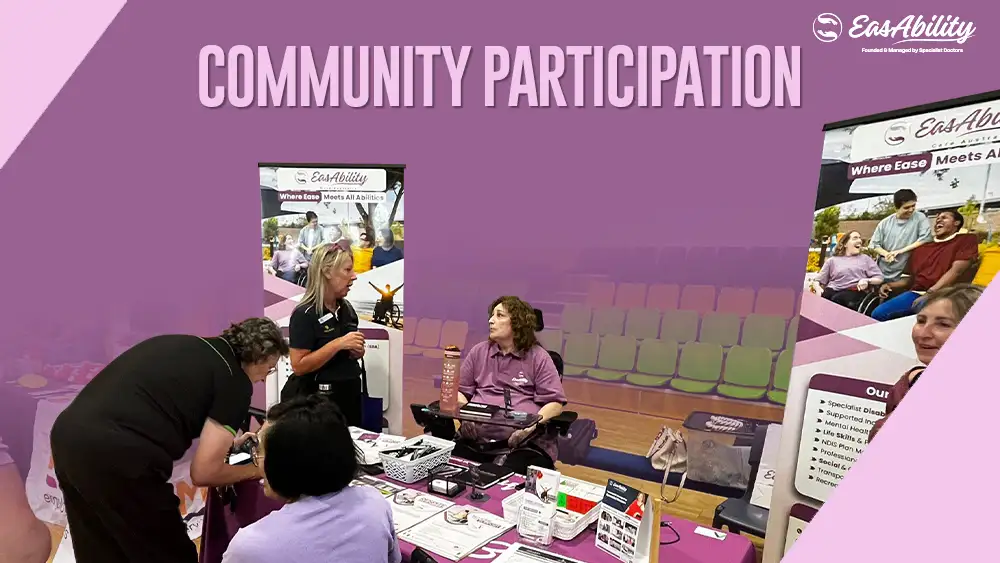
Community Participation influences thinking processes, emotions, and interactions with the environment by improving mental well-being. The residents of Australia with disability have to cope with several challenges associated with their state, which impact them emotionally and psychologically, and their interactions with other individuals.
Challenges become especially pronounced during extended periods of isolation without social communication. That is when community engagement proves helpful. It gives the person the possibility to participate in social activities, gain knowledge, and become a part of society.
As a result, confidence increases, stress levels decrease, and even the person’s psychological state improves. There is an especially significant aspect of community participation in promoting mental wellbeing among NDIS funding recipients. When people begin their roles in society through interaction with others and realise they have some utility, their emotional health improves.

Role of Community Participation in Enhancing Psychological Health
Community participation plays a crucial role in shaping how a disabled individual perceives life. It will affect an individual’s psychological well-being, self-esteem, and how they deal with daily problems. Through community participation, one will develop essential ties.
NDIS community participation is all about encouraging individuals to engage in activities that align with their interests and goals. Examples include group lessons, social activities, volunteering, or learning activities. Each activity helps boost psychological health and reduce loneliness.
Community participation also supports mental balance by creating structure. A structured routine reduces uncertainty and gives people something meaningful to look forward to. This stability plays a key role in maintaining mental wellness over time.
Most importantly, this type of participation builds connection. And connection is one of the strongest protective factors for mental health.
What is Community Participation in Relation to the NDIS
As a result of participating in community activities through the NDIS, individuals will engage in social and other community activities. As such, they will be able to live their lives independently with a very high quality of life. The individual needs to be involved in community affairs and interact with people.
The community participation strategy through the NDIS is important for building individuals’ confidence. It is also useful in helping them venture into new areas without any danger.
Community participation also strengthens independence in individuals with disabilities. As people learn to interact socially, they acquire skills that help them grow in life. These include communication, decision-making, and emotional skills.
NDIS Social and Community Participation
Social and community participation under the NDIS is a process in which people interact with others and engage in community activities.
This may include:
- Joining hobby clubs
- Attending community events
- Joining sports or art classes
- Attending social gatherings
This is an example of engagement that improves communication and fosters emotional connection with others. Following such engagements, a person feels more connected and, hence, is socially well.
Social Engagement and Psychological Well-being
There exists a close relationship between social engagement and mental well-being. By nature, man is a social animal. Social inactivity results in poor mental health.
Community engagement helps individuals get involved and reduces their stress levels, too. Moreover, there has been tremendous progress in emotional stability and in one’s sense of connection with one’s environment.
Significance of Social Connections in Achieving Mental Wellness
Social connectivity contributes positively to mental well-being because one will never feel lonely or socially neglected. Every time a person engages in conversation, storytelling, or any other task, he or she gets an understanding from other people.
It becomes much easier to tackle life challenges when one feels socially connected. This helps one achieve emotional stability.
Social connectivity also promotes positive thoughts. Regular interaction reduces negative thought cycles that often appear during isolation.
Impact on Emotional Well-Being and Daily Life Stability
Strong community engagement improves emotional well-being by creating consistency in daily life. People feel more motivated when they have activities and social commitments.
It also improves routine. Regular schedules reduce anxiety and give people a sense of greater control over their lives, leading to improved confidence and decision-making.
Participation in communities also promotes emotional processing, as speaking with others facilitates emotional regulation, thereby reducing internal pressure.
Why Socialisation is the Best Method to Avoid Loneliness
The best remedy for loneliness is socialisation, since a person who feels socially involved will not experience psychological or emotional strain and will have self-confidence.
How Social Connections Reduce Isolation
Loneliness and mental well-being are always interrelated, particularly if we talk about individuals with disability. It might be caused by a lack of mobility, social issues, or self-confidence.
This isolation often leads to:
- Low mood
- Reduced motivation
- Anxiety
- Lack of self-confidence
If loneliness persists for a long time, it will affect an individual’s psychological state.
Impact of Community Engagement on Social Isolation Challenges
For those who have a disability, social isolation can lead to emotional problems. It can make things difficult and decrease independence.
Involvement with the community helps in changing things around. Any social interaction, whether it is a conversation or an activity, helps lift the mood. With greater connection, one’s emotions improve.
Building Confidence Through Community Activities
Confidence grows through experience. Community activities provide safe spaces where individuals can learn, try new things, and grow at their own pace.
Skill Development and Independence Through Participation
One of the key outcomes of community participation in NDIS programs is skill development. People learn communication, social, and practical life skills.
This supports building independence through community engagement. As individuals gain experience, they rely less on constant support and become more self-assured in everyday situations.
Skills developed through participation often include:
- Social communication
- Decision-making
- Problem-solving
- Time management
These skills directly improve independence and mental strength.
Real-Life Confidence-Building Through Social Experiences
Success in reality increases confidence. Engaging in group activities, forming new friendships, and accomplishing certain tasks help you acquire psychological empowerment.
The more successful you become, the higher your confidence, which leads to greater involvement and improved social welfare.
Benefits of Community Participation for Disabled People
It is possible to find many benefits in community activities. NDIS community participation benefits overview
Key NDIS community engagement benefits include:
- Reduced social isolation
- Improved emotional wellbeing
- Increased confidence
- Better communication skills
- Stronger independence
- Improved mental wellness
These benefits support both short-term and long-term mental health improvement.
The Link Between Community Participation and Mental Well-being
Community participation improves well-being by creating consistent social engagement. Over time, this reduces stress and builds emotional resilience.
It also helps people develop purpose. If people feel that they are contributing to something important, their mental well-being is automatically boosted.
Regular involvement fosters consistent habits, stronger relationships, and overall well-being.
Social Participation of Disabled Individuals Under NDIS in Australia
Social participation of people with disabilities in Australia is very important for inclusive living. It makes sure that no one feels left out of the normal community experience.
NDIS programs help people access activities that match their interests and needs. This improves inclusion and strengthens emotional health.
Community engagement also reduces barriers that often prevent engagement. It promotes equality and helps individuals feel accepted in society.
How EasAbility Supports Community Participation
The community involvement at EasAbility is based on genuine engagement, social support, and personal development. It recognises that mental well-being increases when one feels accepted, supported, and respected.
Mental wellness highly relies on social connectedness. Otherwise, an individual experiences feelings of loneliness and depression. EasAbility minimises these problems through social inclusion in the community.
The goal is not just participation, it is belonging. When individuals feel they belong, their confidence and mental wellness improve naturally.
Programs, guidance, and support approach at EasAbility
EasAbility supports individuals through:
- Personalised community engagement planning
- Support to access community activities for people with disabilities
- Encouragement for safe social engagement
- Skill-building through real-world experiences
- Emotional support during community involvement
Each plan matches the person’s comfort level and goals. Some individuals start slowly, while others engage more actively. Support adapts based on needs.
Conclusion
Community participation is another essential aspect that helps improve psychological well-being and enhance quality of life. Community involvement encourages socialisation, discourages social isolation, and enhances psychological well-being, leading to increased feelings of inclusiveness, belonging, and purpose in one’s life.
The person getting assistance with community participation through the NDIS scheme does not engage socially but becomes more confident, independent, and mentally healthy as a result. Community involvement will help him feel valued and give him some control over his activities. To conclude, participating in the community benefits a person throughout their life.
EasAbility Care – General Information Disclaimer
The information provided on this page is for general informational purposes only and does not constitute professional, legal, medical, or NDIS advice. While reasonable efforts are made to ensure the accuracy of the content, EasAbility Care makes no representations or warranties regarding the completeness, reliability, or suitability of the information provided.
Please note:
- EasAbility Care provides a range of disability support services designed to assist NDIS participants in achieving their goals, increasing independence, well-being, and community participation.
- EasAbility Care offers various NDIS-related supports, and the availability of specific services may vary depending on individual circumstances, funding, and location.
- Eligibility for NDIS funding and related supports is determined solely by the National Disability Insurance Agency (NDIA) based on a participant’s individual needs, goals, and assessments.
- Access to services, funding approvals, and support arrangements may vary depending on a participant’s NDIS plan and personal circumstances.
- Users should seek independent advice from the NDIA, Support Coordinators, Support Workers, Psychiatrists, Psychologists, General Practitioners, or other qualified professionals before making decisions based on the information available on this website.
To the maximum extent permitted by law, EasAbility Care accepts no liability for any loss or damage arising from reliance on the information contained on this website. This disclaimer may be updated at any time without notice.