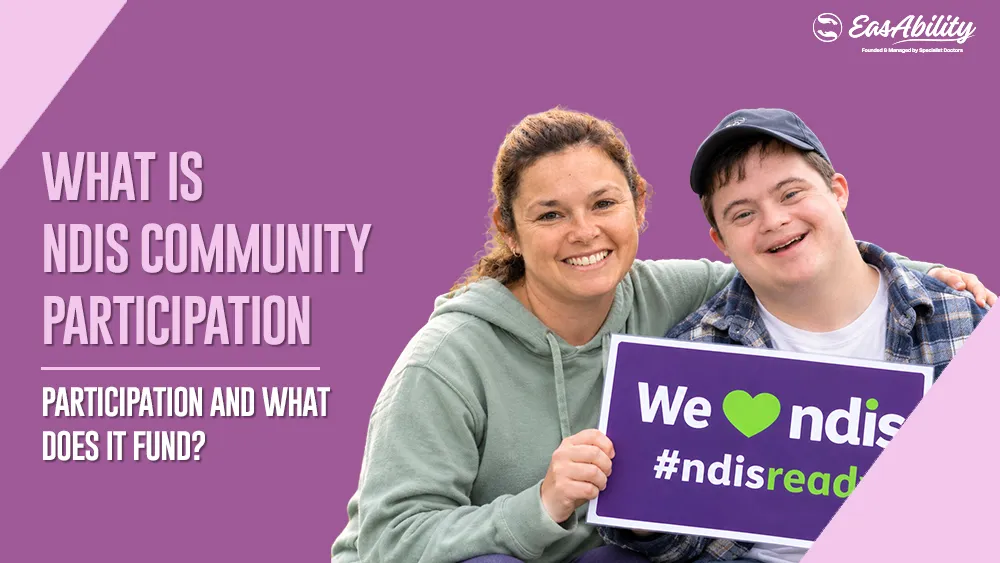
NDIS community participation funding helps you take part in social, recreational, and community life. It can pay for a support worker to go with you, help you build skills to get out and about, or support you at a group activity.
In an NDIS plan, this funding sits in two places. Under Core supports, “Assistance with Social, Economic and Community Participation” (previously called Assistance with Social and Community Participation) pays for help to join in activities. Under Capacity Building supports, it pays for skill-based learning that helps you do more on your own.
Not everyone has an NDIS plan. If you don’t, this guide also explains what support is being built outside the NDIS and what it means for you.

What Does the NDIS Community Participation Fund Do?
The NDIS generally funds the support you need to participate in an activity, not the activity’s cost.
Common examples of NDIS community participation activities include:
- A support worker who goes with you to a class, sports club, market, library or concert
- Group activities in Adelaide, such as social groups, day outings, camps and holidays
- Skills training, like learning to use public transport or practising social skills
- Help to try something new, such as a hobby, a local course or volunteering
Everyday costs that anyone would pay, such as tickets, entry fees and memberships, are usually not covered.
To be funded, a support must relate to your disability, help you work towards your plan goals, and be “reasonable and necessary” under NDIS rules. For example, if your goal is to make friends, funding may cover a support worker at a community woodwork class. Your plan sets out which budgets you can use, so check it before you book.
General Supports vs Targeted Supports
The NDIS is not the only source of help. The government is now building Foundational Supports outside the NDIS. They come in two types:
General Supports
This support is open to all people with disability, including NDIS participants. They focus on information, advice, peer connection and building skills and confidence. They also help community groups become more welcoming.
Examples include a peer support group, a supported playgroup, a workshop on finding local services, or advice on where to start.
Targeted Supports
This sits between everyday services and the NDIS. They are for people who need more help than general supports offer, but don’t need the NDIS.
For children, examples include speech therapy and low-cost assistive technology. For adults, the NDIS Review suggested help at home and in the community, plus psychosocial support.
Governments have not yet confirmed adult targeted supports or their start dates.
Who Can Access What?
Group | What is Available Now | What is Still Developing |
Children aged 8 and under (developmental delay or autism, low to moderate support needs) | Thriving Kids general supports, which began on 1 October 2026. NDIS supports continue for children with high support needs and those already enrolled. | Targeted supports roll out state by state from 2027. NDIS access changes start 1 January 2028. |
People under 65 who are not NDIS-eligible | Mainstream services, local community groups and peer networks | General and targeted support for adults are still being designed. Timing is unconfirmed |
Current NDIS participants | Your plan and funding continue, including community participation supports. You can also use general supports | No change to adult plans has been announced. Usual plan reviews still apply. |
People over 65 | You cannot join the NDIS after 65. If you joined before 65, you can stay. Otherwise, aged care programs such as CHSP and Support at Home are the main pathway. | Aged care is still transitioning, and CHSP is expected to merge into Support at Home no earlier than July 2027. |
If you are an NDIS participant approaching 65, speak to your planner before starting any aged care services. Starting some aged care services can end your NDIS eligibility.
Foundational Supports vs the NDIS
The two systems work differently:
The NDIS gives eligible people an individual budget. It is based on your assessed needs, and you choose your providers.
Foundational Supports are funded by governments and delivered as programs and services, not as individual budgets. For example, Thriving Kids will not provide individual funding the way the NDIS does.
Foundational Supports sit under the National Agreement on Foundational Supports, a five-year agreement that began on 2 February 2026. It includes $10 billion in joint government funding. The NDIA still decides eligibility for the NDIS separately from these programs.
What is Thriving Kids?
Thriving Kids is the first phase of Foundational Supports. It is for children aged 8 and under with developmental delay or autism who have low to moderate support needs, and for their families.
The first support started on 1 October, 2026 and covers information, advice, parenting supports and supported playgroups. Targeted supports, such as allied health, follow in stages, with full rollout expected by 1 January 2028.
What Is Confirmed and What Is Still Being Developed?
Confirmed
- The National Agreement on Foundational Supports is in place.
- Thriving Kids began on 1 October, 2026
- Children with permanent and significant disability, including high support needs, remain eligible for the NDIS
- Announced NDIS access changes are limited to children aged 8 and under with low to moderate needs, from 1 January 2028.
Still being Developed
- Which services each state will deliver and where. Check South Australian Government updates for local details
- Targeted support for adults and when they will start
- How people will be assessed for targeted supports
- Support for teenagers. A Thriving Teens idea has been floated, but there are no firm plans
What Do Changes Mean for Current NDIS Participants?
For most current participants, nothing changes today. Your plan, your funding and your community participation supports continue under your plan’s usual review process.
Children already receiving NDIS support can continue accessing their plans, subject to the usual reviews and reassessments. Children aged 8 and under who join the scheme before 1 January 2028 will continue to be assessed under the existing eligibility criteria until the changes take effect. If this applies to your child, speak with your NDIS planner about what to expect at their next review.
Frequently Asked Questions
Can I use NDIS funding for community activities?
Yes, if the support relates to your disability, links to your goals and is reasonable and necessary. The NDIS generally covers the support you need to take part, not entry or participation fees.
What is the difference between core and capacity building community participation?
Core funding pays for support to take part now, such as a support worker. Capacity-building funding pays for skills-based learning so you can participate more independently.
Can I get NDIS group activities in Adelaide without an NDIS plan?
Not through NDIS funding. You can still use local community groups, peer networks and general supports as they become available.
Is Thriving Kids replacing the NDIS?
No. It sits alongside the NDIS. Children with high support needs will remain eligible for the NDIS.
Can I join the NDIS after turning 65?
No, you cannot join the NDIS after turning 65.
How EasAbility Can Help You Move Forward
Start by writing down two or three community goals, such as joining a club or learning to catch the bus. They will help at your next plan review, and they will guide any conversation with a provider.
If you’re unsure whether you are eligible, the NDIS website has an “Am I eligible?” checklist, and the Department of Health’s Thriving Kids page lists current supports for families.
If you are an NDIS participant in Adelaide, EasAbility can talk through community participation services that fit your goals, along with transport support to help you get there. EasAbility is a doctor-led, NDIS-registered provider. Contact our team to start a conversation.
EasAbility Care – General Information Disclaimer
The information provided on this page is for general informational purposes only and does not constitute professional, legal, or NDIS advice. While reasonable efforts are made to ensure accuracy, EasAbility Care makes no representations or warranties regarding the completeness, reliability, or suitability of the information.
Please note:
- EasAbility Care supports NDIS participants by assisting them to explore suitable accommodation options and other disability supports.
- EasAbility Care provides SIL services, community participation, and other NDIS-related supports.
- EasAbility Care may not own, manage, or directly provide Specialist Disability Accommodation (SDA) housing and usually works with registered SDA providers to help identify appropriate options.
- Eligibility for SDA and related supports is determined solely by the National Disability Insurance Agency (NDIA).
- Users should seek independent advice from the NDIA, Support Coordinators, or other qualified professionals before making decisions based on this information.
To the maximum extent permitted by law, EasAbility Care accepts no liability for any loss or damage arising from reliance on the information contained on this website. This disclaimer may be updated at any time without notice.