Finding an SDA home that looks suitable at first can feel like a big step forward. But once you visit the property or start thinking about day-to-day life, you may realise that it does not actually work for your disability needs.
Perhaps the bathroom is difficult to use, there isn’t enough room for your mobility equipment, the location makes it hard to access your usual services, or the home’s design does not match the level of accessibility you require.
You do not have to ignore these concerns simply because a property has been offered to you. The important thing is to understand what is not working, raise it with the right people, and review your available NDIS housing options before committing.

What Makes an SDA Home Suitable for Your Needs?
Specialist Disability Accommodation (SDA) is designed for NDIS participants with very high support needs who meet the relevant eligibility criteria. These homes are purpose-built or specially designed to make everyday living safer, more accessible and more manageable.
Because everyone’s needs are different, SDA homes come with different design features and levels of accessibility. The aim is to help people find a home that works for them, rather than having to adapt their daily life around a property that isn’t suitable.
. The NDIS currently recognises four SDA design categories:
- Improved Liveability
- Fully Accessible
- Robust
- High Physical Support
The right category depends on your individual circumstances and the type of housing you are funded for.
However, choosing suitable SDA accommodation involves more than matching a design category to your NDIS plan. A property can technically meet its SDA requirements while still not being the right fit for a particular person.
What Should You Check Before Accepting an SDA Home?
If you are considering an SDA property, take time to look beyond photographs and basic property descriptions.
1. SDA design category
Check that the property’s design category matches the SDA funding and housing needs in your plan. If you are unsure what a particular category means for you, ask your support coordinator, LAC or another person involved in your NDIS planning to help you understand the requirements.
2. Accessibility features
Think about how you will actually use the home.
Depending on your needs, this may include checking:
- Door widths and access points
- Step-free entry
- Bathroom layout
- Shower access
- Grab rails and other accessibility features
- Kitchen access
- Space for wheelchairs or other mobility equipment
- Hoist compatibility or other equipment requirements
- Emergency and safety features
- Space for support workers
A property can look accessible during a quick inspection but still present problems once you consider your normal routine.
3. Location
Location can have a major impact on whether disability housing works for you.
Consider how close the home is to:
- Family and friends
- Work, study or day programs
- Medical and allied health services
- Shops and community facilities
- Public transport
- Other regular activities
Moving into an accessible home that leaves you isolated from the people and services you rely on may not be a good long-term solution.
4. Bedroom and living arrangements
If the property is shared, ask questions about the number of residents and the household arrangement.
You may want to know:
- How many people will live there?
- Will you have your own bedroom and bathroom?
- Who chooses the other residents?
- Is there enough shared living space?
- How will support workers access the property?
- Does the arrangement suit your preferences and routines?
These details can affect your experience of the home just as much as its physical accessibility.
5. Your current and future needs
Your housing needs may also change over time. Consider whether the property is likely to remain practical if your mobility, equipment, or support requirements change.
It can be difficult to predict the future, but discussing this with your support team before choosing a home can help you avoid moving into a property that is unsuitable from the outset.
What If the SDA Home Offered Doesn't Meet Your Needs?
If you have inspected an SDA home and it does not suit your disability needs, start by identifying exactly why. Write down the specific problems rather than simply saying that you do not like the property.
Specific information can help your support coordinator, LAC or provider understand what you need from your next housing option. If you have not yet signed a service agreement, raise your concerns before committing to the property. The NDIS recommends checking that a dwelling meets your needs before entering into an SDA service agreement.
You can also discuss the property with your support coordinator, LAC or other relevant NDIS contact and ask what alternatives may be available.
Can You Choose a Different SDA Home?
Finding a suitable SDA home may take time. An available property is not necessarily the right property. If the first SDA accommodation offered to you does not meet your needs, you can ask about other available SDA homes and properties that may better match your requirements.
When comparing SDA properties, consider more than just availability.
Consider the home’s:
- SDA design category
- Building type
- Accessibility features
- Location
- Number of residents
- Physical layout
- Available facilities
- Compatibility with your support needs
How to Find More Suitable SDA Vacancies
Finding the right SDA home can take some searching, especially when you have specific accessibility or living requirements.
Use the NDIS SDA Finder
The NDIS SDA Vacancy Finder can help participants search for suitable vacancies based on information such as location, design category, building type and other characteristics. This can give you a starting point when looking for SDA vacancies.
However, the NDIS notes that not every SDA vacancy is advertised through the Finder, so it can also be worth contacting SDA providers directly.
Speak with SDA providers
SDA providers may know about properties that are available now or expected to become available. When contacting a provider, explain your needs clearly. Instead of simply asking whether they have an SDA vacancy, ask whether the property can accommodate your particular requirements.
Involve your support coordinator or LAC
A support coordinator or LAC may be able to help you understand your options, communicate with providers, and work through problems with your current housing search. They can also help you consider whether your existing NDIS funding and home-and-living arrangements reflect your needs.
When Should You Consider an NDIS Plan Review?
Not every unsuitable SDA property means that your NDIS plan needs to change. For example, if you already have appropriate SDA funding but the available property is unsuitable, the immediate issue may simply be finding a better-matched vacancy.
However, your circumstances may be different if your disability-related needs have changed, your current housing situation is no longer appropriate, or the supports and housing arrangements in your plan do not reflect your needs.
In these situations, speak with your support coordinator, LAC or the NDIS about whether a plan review or another appropriate pathway may be necessary. The key is to avoid assuming that changing your funding is the answer before establishing what is actually causing the problem.
What If You Are Already Living in an SDA Home That Doesn't Suit You?
The situation can be more complicated if you have already moved into an SDA home. Start by documenting the problems you are experiencing. Keep a record of specific accessibility issues, safety concerns or difficulties using the property.
Then discuss them with the relevant people, which may include:
- Your SDA provider
- Support coordinator
- LAC
- NDIS representative
- Other professionals involved in your housing arrangements
Ask whether the issue can be addressed through an appropriate adjustment, modification or change to your circumstances.
If the home remains unsuitable and cannot reasonably meet your needs, you may need to explore other SDA properties or NDIS home and living options.
Do not make major changes to your housing arrangements without understanding how they could affect your NDIS funding, tenancy and support agreements.
What Are Your Rights When Choosing SDA Accommodation?
Your housing should work for you, not simply be a property that happens to be available.
The NDIS Practice Standards for SDA include expectations around participant rights, choice and control, communication, reasonable adjustments and the delivery of supports that respond to individual needs.
If you have concerns about your SDA provider or believe your needs are not being appropriately addressed, raise the issue with the provider first where possible.
If you cannot resolve the concern, you can seek further assistance through the appropriate NDIS channels, including the NDIS Quality and Safeguards Commission where relevant.
Keeping written records of your concerns and conversations can make it easier to explain what has happened and what outcome you are seeking.
What Other NDIS Home and Living Options Could You Consider?
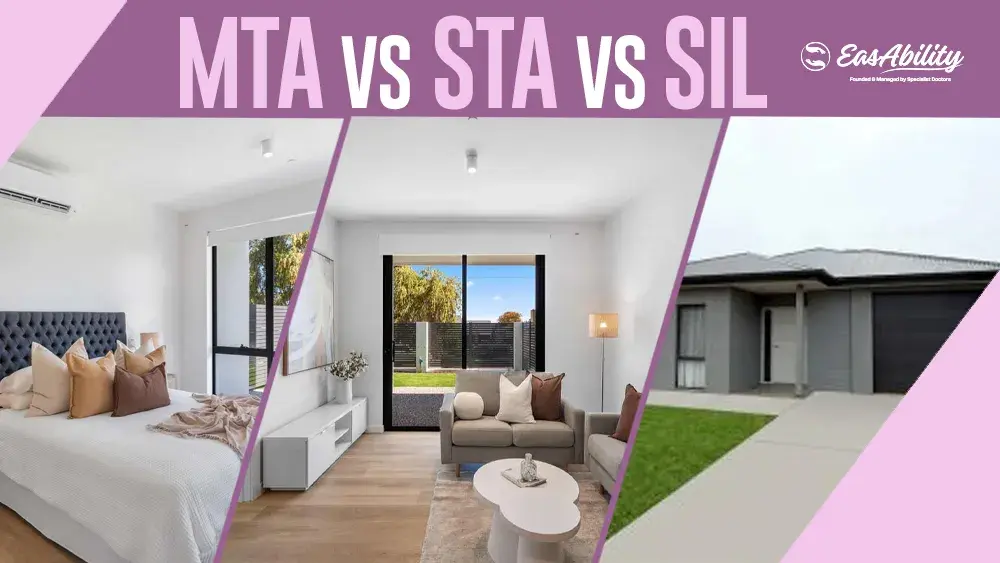
SDA is only one part of the broader NDIS home and living system. Depending on your circumstances and funding, other options may include different living arrangements or supports such as Supported Independent Living (SIL), Individualised Living Options (ILO) or Medium Term Accommodation (MTA).
These options serve different purposes. For example, SIL provides support to help an eligible participant live as independently as possible, while SDA relates to the physical home itself. ILO is another approach to arranging support around where and how someone lives.
This is why it is important to understand what problem you are trying to solve before deciding that you need a different type of NDIS accommodation. Your support coordinator, LAC or NDIS contact can help you explore the options that may be appropriate for your circumstances.
How EasAbility Can Help You Explore SDA Housing Options
Finding disability housing that genuinely works for your needs can take more than searching for an available property.
At EasAbility, we understand that SDA housing needs to fit the person, not just the eligibility criteria. We can help you explore available SDA homes and consider factors such as accessibility, location, property features and your preferred living arrangement.
If you are looking for SDA accommodation or want to discuss available SDA vacancies, our team can help you understand the next steps and explore housing options that may be more suitable for your needs
Frequently Asked Questions
Can I say no to an SDA home that doesn’t meet my needs?
If you have not yet committed to the property, discuss your concerns with your support team and provider before signing an SDA service agreement. The NDIS recommends checking that a dwelling meets your needs before making this commitment.
What should I do if an SDA property is not accessible enough for me?
Identify the specific accessibility problems and discuss them with your SDA provider, support coordinator, LAC or relevant NDIS contact. You may need to look for another property that better matches your requirements.
Does every SDA vacancy suit every participant?
No. SDA homes have different design categories, building types, locations and features. A vacancy needs to be considered against the individual participant’s needs and SDA funding.
How do I find SDA vacancies?
You can use the NDIS SDA Finder and contact SDA providers directly. Not every vacancy is necessarily advertised through the NDIS Finder.
What are the four SDA design categories?
The four SDA design categories are Improved Liveability, Fully Accessible, Robust and High Physical Support.
Do I have to accept the first SDA home I am offered?
An available property should still be assessed for suitability. If you have concerns, discuss them before committing to the property and ask about other available SDA housing options.
Can I change SDA providers?
Changing providers may be possible, but the process can depend on your agreements and circumstances. Before making a change, understand how it could affect your housing and supports.
Does an SDA provider provide my daily support?
SDA relates to the specialised housing. Other supports, such as personal care or SIL, are separate and depend on your NDIS plan and circumstances.
What if my disability needs have changed since my SDA funding was approved?
Speak with your support coordinator, LAC or the NDIS about your current circumstances. If your existing funding or housing arrangements no longer reflect your needs, you may need to explore the appropriate review or change pathway.
Can I find accessible housing outside SDA?
Yes. SDA is one type of disability housing available within the NDIS home and living framework. Other housing and support arrangements may be relevant depending on your circumstances, eligibility and funding.
Conclusion
An SDA home should be more than a place that meets a basic housing requirement. It needs to work with your disability, daily routine, accessibility needs and the supports that help you live the way you want to live.
If an SDA property offered to you doesn’t feel right, don’t rush into accepting it. Find out exactly what isn’t working, discuss your concerns with your support team and explore other SDA vacancies or NDIS housing options that may be a better match.
Taking the time to find suitable disability accommodation can make a significant difference to your independence, safety and quality of life.